As a trusted supplier of chain slings and hardware riggings, I understand the critical importance of ensuring the safety and reliability of our products. One of the fundamental aspects of upholding these standards is rigorous testing. In this blog, I’ll delve into the various testing methods for chain slings and hardware riggings, sharing insights that come from years of experience in the industry. Chain Sling and Hardware Riggings
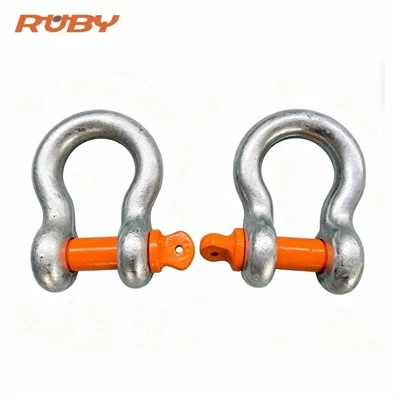
Non – Destructive Testing Methods
Non – destructive testing (NDT) is a crucial set of techniques that allow us to evaluate the integrity of chain slings and hardware riggings without causing damage. One of the most commonly used NDT methods is Visual Inspection. This is the simplest yet highly effective initial step. Every time a product leaves our facility, it undergoes a thorough visual check. We look for signs of wear, such as excessive abrasion on the chains, which can reduce the strength of the material. Cracks on the hardware riggings, especially in high – stress areas like the hooks or shackles, are also carefully inspected. Any signs of deformation, like bent links in the chain or distorted hooks, are red flags. Visual inspection is not just a quick look – over; it involves using appropriate lighting and magnification tools to spot even the smallest flaws.
Another important NDT method is Magnetic Particle Testing (MPT). This technique is particularly useful for detecting surface and near – surface defects in ferromagnetic materials, which are commonly used in chain slings and many hardware riggings. Firstly, the test object is magnetized. Then, fine magnetic particles are applied to the surface. If there are any cracks or discontinuities, the magnetic field is disrupted, and the particles will accumulate at these defect sites, making them visible. For example, in a large – scale link of a chain sling, MPT can quickly identify tiny cracks that may not be visible to the naked eye during a visual inspection. The advantage of MPT is its high sensitivity and relatively quick testing process, which helps us to ensure the quality of a large number of products efficiently.
Ultrasonic Testing (UT) is also a key NDT method in our testing arsenal. It uses high – frequency sound waves to detect internal flaws in the materials. A transducer is used to send ultrasonic waves into the test object, and any discontinuities, such as internal cracks or voids, will reflect the waves back. By analyzing the reflected signals, we can determine the size, location, and orientation of the defects. UT is very effective for inspecting the internal structure of thick – walled hardware riggings, like large – diameter shackles. It can detect problems deep within the material that may not be accessible through other non – destructive methods.
Destructive Testing Methods
While non – destructive testing helps us identify many potential issues, destructive testing is sometimes necessary to gain a more comprehensive understanding of the product’s properties. Tensile Testing is one of the most important destructive tests for chain slings and hardware riggings. In this test, a sample of the chain or hardware is subjected to a gradually increasing load until it breaks. This test provides us with key information such as the ultimate tensile strength (UTS) and yield strength of the material. For chain slings, we measure how much load the chain can withstand before it fails. For hardware riggings like eyebolts, we determine the maximum force they can bear. The results of tensile testing are used to ensure that our products meet or exceed industry standards.
Charpy Impact Testing is another significant destructive test. It measures the impact toughness of the material. A notched sample is struck by a pendulum, and the energy absorbed during the fracture is measured. This test is crucial because it helps us understand how the material will perform under dynamic loading conditions. For example, in a lifting operation where sudden loads or impacts may occur, a chain sling or hardware rigging with good impact toughness is less likely to fail. By conducting Charpy Impact Testing, we can select the appropriate materials and heat – treatment processes to ensure the products’ reliability in real – world applications.
Fatigue Testing
Fatigue is a major concern in the use of chain slings and hardware riggings, as they are often subjected to repeated loading and unloading cycles. Fatigue Testing is designed to simulate these real – world conditions. A sample is subjected to a cyclic load at a specific frequency and amplitude for a large number of cycles. The test continues until the sample fails or reaches a pre – determined number of cycles. Through fatigue testing, we can predict the service life of our products. For instance, if a chain sling is used in a crane that makes multiple lifts per day, fatigue testing can give us an estimate of how long the sling will last before it is likely to develop cracks due to fatigue. This information is invaluable for both us as suppliers and our customers, as it helps in planning maintenance schedules and replacement strategies.
Chemical Analysis
Chemical analysis is an important part of the overall testing process. It allows us to determine the chemical composition of the materials used in chain slings and hardware riggings. By using techniques such as spectroscopy, we can accurately measure the amounts of different elements in the material. The chemical composition has a direct impact on the mechanical properties of the product. For example, the carbon content in steel affects its strength and hardness. By ensuring that the chemical composition meets the required specifications, we can guarantee the quality and performance of our products. Additionally, chemical analysis can also help us detect any impurities or alloying deviations that may affect the product’s integrity.
Third – Party Testing and Certification
In addition to our in – house testing, we also rely on third – party testing and certification bodies. These independent organizations have the expertise and equipment to conduct comprehensive testing in accordance with international standards. They review our testing procedures, perform their own tests on our products, and issue certifications if the products meet the specified requirements. Third – party certification not only provides an extra layer of quality assurance but also enhances the credibility of our products in the market. Customers can have more confidence in our chain slings and hardware riggings knowing that they have been verified by independent experts.
Conclusion

The testing of chain slings and hardware riggings is a multi – faceted process that involves a combination of non – destructive, destructive, fatigue, and chemical analysis methods. Each test plays a crucial role in ensuring the safety, reliability, and performance of our products. As a supplier, we are committed to using these testing methods to the highest standards to provide our customers with the best – quality chain slings and hardware riggings.
Swivel Point If you are in the market for high – quality chain slings and hardware riggings, I encourage you to reach out to us for procurement and further discussions. We are always ready to share our knowledge and expertise to help you find the right products for your specific needs.
References
- ASME B30.9 – Safety Standard for Slings
- ASTM A391 – Standard Specification for Alloy Steel Chain, Grade 80, for Use in Chain Slings
- ISO 7599 – Lifting appliances – Hooks – Technical delivery requirements
Hangzhou Ruby Imp. & Exp. Co., Ltd.
As one of the most experienced chain sling and hardware riggings manufacturers and suppliers in China, we offer a wide range of products with superior quality. We warmly welcome you to wholesale custom made chain sling and hardware riggings at competitive price from our factory.
Address: Taoyuan Industrial Park, Puyang Town, Xiaoshan, Hangzhou, Zhejiang, China.
E-mail: Sales5@z2lifting.com
WebSite: https://www.rubylifting.com/
