In the realm of environmental monitoring, the development of water quality detection systems stands as a critical yet challenging endeavor. As a supplier of detection systems, I have witnessed firsthand the complexities and hurdles that come with creating reliable and effective solutions for assessing water quality. This blog post aims to delve into the various challenges faced in this field and shed light on the innovative approaches we are taking to overcome them. Detection Systems

Technological Limitations
One of the primary challenges in developing water quality detection systems is the technological limitations that exist. Water is a complex matrix containing a wide range of contaminants, including heavy metals, organic compounds, pathogens, and nutrients. Detecting and quantifying these contaminants accurately and in real-time requires advanced analytical techniques and sensors.
However, many existing detection technologies have limitations in terms of sensitivity, selectivity, and reliability. For example, traditional methods such as spectrophotometry and chromatography can be time-consuming, expensive, and require skilled operators. Moreover, these methods may not be suitable for detecting low levels of contaminants or for on-site monitoring.
To address these challenges, we are investing in research and development to explore new technologies and sensor materials. For instance, we are working on developing nanosensors that can detect contaminants at extremely low concentrations with high sensitivity and specificity. These nanosensors are based on the unique properties of nanomaterials, such as their large surface area-to-volume ratio and high reactivity, which make them ideal for detecting trace amounts of contaminants.
In addition, we are exploring the use of artificial intelligence (AI) and machine learning (ML) algorithms to improve the accuracy and reliability of water quality detection systems. AI and ML can analyze large amounts of data collected from sensors and identify patterns and trends that may be difficult to detect using traditional methods. This can help us to develop more intelligent and robust detection systems that can adapt to changing environmental conditions and provide real-time alerts when water quality deteriorates.
Regulatory Requirements
Another significant challenge in developing water quality detection systems is meeting the regulatory requirements set by various government agencies and international organizations. These regulations are designed to protect public health and the environment by ensuring that water quality meets certain standards.
However, the regulatory landscape can be complex and ever-changing, with different countries and regions having their own set of standards and guidelines. For example, in the United States, the Environmental Protection Agency (EPA) sets national standards for drinking water quality, while individual states may have additional requirements. In Europe, the European Union (EU) has established a comprehensive set of regulations for water quality, including the Water Framework Directive and the Drinking Water Directive.
Complying with these regulations requires detection systems to be accurate, reliable, and traceable to international standards. This means that the sensors and analytical techniques used in the systems must be calibrated and verified regularly to ensure their accuracy and precision. In addition, the systems must be able to provide detailed reports and documentation on the water quality data collected, including the methods used for analysis and the uncertainty associated with the measurements.
To meet these regulatory requirements, we work closely with government agencies and international organizations to stay up-to-date on the latest standards and guidelines. We also invest in quality control and assurance programs to ensure that our detection systems meet the highest standards of accuracy and reliability. For example, we have implemented a robust calibration and verification process for our sensors and analytical instruments, and we participate in interlaboratory comparison programs to validate the accuracy of our measurements.
Cost and Affordability
Cost is another major challenge in developing water quality detection systems. Developing and manufacturing advanced detection technologies can be expensive, and the cost of implementing and maintaining these systems can be prohibitive for many customers, especially in developing countries and regions with limited resources.
In addition, the cost of water quality monitoring can vary depending on the type and complexity of the detection system, the frequency of monitoring, and the number of parameters being measured. For example, a comprehensive water quality monitoring system that measures multiple contaminants in real-time can be significantly more expensive than a simple system that measures only a few parameters.
To address the issue of cost and affordability, we are working on developing innovative solutions that are both cost-effective and reliable. For example, we are exploring the use of portable and handheld detection systems that can be used for on-site monitoring at a lower cost than traditional laboratory-based systems. These portable systems can provide real-time data on water quality, allowing for immediate action to be taken if necessary.
In addition, we are working on developing partnerships with governments, non-governmental organizations (NGOs), and other stakeholders to provide affordable water quality monitoring solutions to communities in need. For example, we have partnered with several NGOs to provide water quality monitoring systems to schools and communities in developing countries, helping to ensure that people have access to clean and safe drinking water.
Data Management and Interpretation
Collecting accurate and reliable water quality data is only half the battle. The other half is managing and interpreting this data effectively to make informed decisions about water quality management and protection.
However, managing and interpreting water quality data can be challenging, especially when dealing with large volumes of data from multiple sources. The data may be collected using different methods and instruments, and it may be in different formats and units. This can make it difficult to compare and analyze the data, and to identify trends and patterns over time.
In addition, interpreting water quality data requires a deep understanding of the complex interactions between water quality parameters and the potential health and environmental impacts of contaminants. For example, a high level of a particular contaminant in water may not necessarily mean that the water is unsafe to drink, as the toxicity of the contaminant may depend on its concentration, the duration of exposure, and other factors.
To address these challenges, we are developing advanced data management and analysis tools that can help us to collect, store, and analyze water quality data more effectively. These tools use AI and ML algorithms to identify patterns and trends in the data, and to provide real-time alerts and recommendations based on the analysis.
In addition, we are providing training and support to our customers on how to use these tools and how to interpret the water quality data. This helps to ensure that our customers are able to make informed decisions about water quality management and protection, and to take appropriate action to address any issues that may arise.
Conclusion
Developing water quality detection systems is a complex and challenging task that requires a combination of advanced technologies, regulatory compliance, cost-effective solutions, and effective data management and interpretation. As a supplier of detection systems, we are committed to overcoming these challenges and providing our customers with reliable and innovative solutions for assessing water quality.
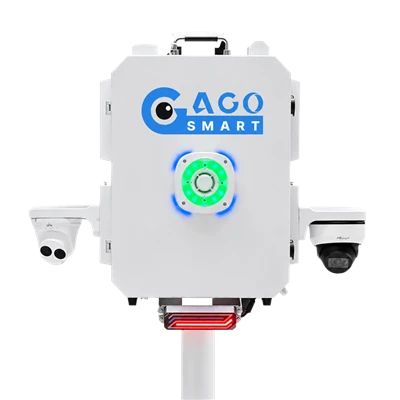
Solar Mobile Surveillance Tower If you are interested in learning more about our water quality detection systems or if you are looking for a partner to help you with your water quality monitoring needs, please contact us to schedule a consultation. We would be happy to discuss your requirements and to provide you with a customized solution that meets your specific needs and budget.
References
- EPA. (2021). National Primary Drinking Water Regulations. Retrieved from https://www.epa.gov/ground-water-and-drinking-water/national-primary-drinking-water-regulations
- European Union. (2020). Water Framework Directive. Retrieved from https://eur-lex.europa.eu/legal-content/EN/TXT/?uri=CELEX:32000L0060
- European Union. (2020). Drinking Water Directive. Retrieved from https://eur-lex.europa.eu/legal-content/EN/TXT/?uri=CELEX:32020L1192
Shenzhen Gago Electronics Co., Ltd.
Shenzhen Gago Electronics Co., Ltd. is one of the most professional detection systems manufacturers and suppliers in China. As we have world-leading production equipment and strong manufacturing capabilities, we warmly welcome you to buy high quality detection systems at competitive price from our factory.
Address: C201,Building B, No.170 Xingfa Road,Shangcun Community, Gongming Street, Guangming District, Shenzhen, China
E-mail: info@gagoelectronics.com
WebSite: https://www.gagodeterrence.com/
