Hey everyone, if you’ve ever worked in metal finishing, casting, or fabrication, you’ve probably run into the term “blast wheel” at some point. Maybe you just know it’s the big thing inside those blaster machines that removes rust or old paint from parts. But today, I want to get into something way more interesting—and super important: how the blast wheel actually shapes the texture of a part’s surface. As someone who’s been supplying blast wheels for over 8 years, I’ve seen firsthand how a tiny tweak to the wheel can make or break a project—like a hydraulic valve that needs a super smooth finish vs. a metal fence post that needs a rough, grippy surface for paint to stick. Let’s break this down without all the stuffy jargon, yeah? Blast Wheel
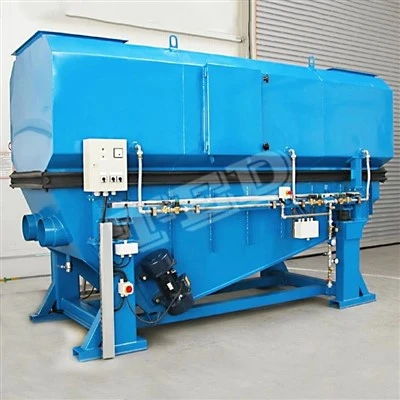
First, let’s keep it simple: what a blast wheel even does. Unlike old suction blasters that use compressed air to shoot abrasive (sand, steel shot, that stuff), a blast wheel is like a centrifugal force machine. It spins really fast—like, 1,500 to 3,000 RPM, depending on the model—and hurls abrasive at parts at 60 to 120 feet per second. That’s way faster than air blasters, which means it’s more efficient, but that speed is exactly what controls the texture. I’ve had customers come to me saying, “My parts came out too rough” or “The finish is too shiny, paint won’t stick”—and 9 times out of 10, the problem traces back to the blast wheel settings or parts.
Let’s start with the big one: wheel speed. This is probably the number one thing that changes texture. If your blast wheel is spinning slow, the abrasive particles hit the part with less force. That means they barely indent the metal surface—so you get a smooth, almost polished look, like a mirror but not too crazy. But if you crank the speed up? Those abrasives hit harder, digging tiny craters and grooves into the surface. That’s a rougher texture. Wait, but it’s not just about how fast it spins—we’re not talking “faster = rougher” for every part, okay? Like, if you’re working on super thin metal (think a soda can lid), cranking the wheel too fast will bend or even punch a hole through it. I once had a customer who was blasting aluminum fridge panels—they cranked the blast wheel speed to try to speed up the process, and ended up with dented panels because the force was too high. That’s the kind of on-the-job mistake only someone who’s been around blast wheels makes.
Next up: abrasive flow rate. This is how much abrasive the blast wheel is throwing out. If you send only a little abrasive, each particle hits the part alone, carving out individual small dimples—so you get a uniform, medium texture. But if you crank the flow rate way up? Abrasive particles start hitting each other mid-flight instead of just the part. That makes the force spread out more, leading to a mix of tiny scratches and uneven indentations. One guy I worked with was blasting steel beams for a bridge—he wanted a super uniform rough texture so the concrete would bond well. At first, he had the flow rate too high, and the beams had weird, splotchy texture because so many abrasives were bouncing off each other. We adjusted the flow, and boom—perfect, consistent rough finish that worked for the bridge. It’s a tiny adjustment that makes a huge difference.
Then there’s the impeller and control cage on the blast wheel. Wait, what’s that? The impeller is the part inside the wheel that feeds the abrasive, and the control cage is the ring around it that directs where the abrasive goes. If the control cage has big openings, the abrasive spreads out more when it exits the wheel—so it covers a wider area, but each particle is more spread out, leading to a rougher texture overall (since some spots get more abrasive hits than others). If the control cage has smaller openings, the abrasive is focused into a tight, narrow stream—so every part of the surface gets hit evenly, leading to a smoother, more consistent texture. I had a customer who was blasting small engine parts for cars—they needed a super consistent smooth texture to make sure gaskets sealed right. They were using a blast wheel with a standard control cage, and the parts came out with rough spots in the middle. Swapping to a control cage with smaller openings fixed it immediately—no more uneven texture, just perfect finish every time.
Wait, also—wheel diameter and blade design. The blades are the metal fins inside the blast wheel that actually fling the abrasive. If you have a smaller wheel, the blades are shorter, so they spin faster for the same RPM, right? That means the abrasive leaves the wheel with more force—rougher texture. Bigger wheels have longer blades, so they can spin at the same RPM but the force is spread out more—smoother finish. Also, blade material matters. If your blades are worn down, they don’t fling the abrasive with the same force as new blades. So over time, even if you don’t change settings, the texture starts to smooth out because the blades are worn. I always tell my customers to check their blades every 6 months—worn blades mean inconsistent texture, which leads to more rework, and no one wants that.
Let’s talk about real-world examples, because that’s what this is all about. Last year, a customer who makes hydraulic cylinders came to me panicking. They were blasting the inner walls of cylinder liners, and the texture was either too rough (so the piston rod wore out fast) or too smooth (so hydraulic fluid leaked past the seals). We tested three different blast wheel setups for them. First, we used a standard high-speed blast wheel with medium abrasive flow—they got a texture of 2 Ra (that’s roughness average, by the way, lower number is smoother) which was way too smooth for their needs. Next, we swapped to a lower-speed blast wheel with a tighter control cage, adjusted the flow rate, and hit a 4 Ra texture—perfect. That’s the sweet spot where seals work and there’s no wear. Another customer was blasting metal signage—they wanted a rough, non-slip texture so the paint didn’t peel. We used a higher-flow blast wheel with wider control cage openings, and the texture came out to 8 Ra, which was exactly what they needed. They said the paint job lasted 3 times longer than before.
Here’s the thing I always tell people: blast wheels aren’t one-size-fits-all. A lot of suppliers just sell you a wheel and say “it works,” but that’s not how it is. The influence on texture isn’t a straight line—there’s a lot of moving parts, and you have to tweak them based on what you’re blasting. I’ve had customers come in with a sample part that needs a specific texture, and we adjust wheel speed, flow rate, control cage, even blade design to get exactly what they need. That’s why when we supply blast wheels, we don’t just drop them off—we walk customers through the settings, explain how each tweak changes texture, and help them avoid mistakes like worn blades or too-high flow rates.
Wait, let’s address a common myth I hear all the time: “Abrasive type is the only thing that changes texture.” Yeah, abrasive type matters—steel shot gives a different texture than aluminum oxide— but the blast wheel is the one that controls how that abrasive hits the part. You can use the same steel shot, but if you switch from a 2,000 RPM blast wheel to a 2,800 RPM one, the texture will be way rougher, no matter the abrasive. I’ve seen that firsthand with a customer who was blasting cast iron engine blocks. They were using steel grit and a slow wheel, getting a medium texture, but when they swapped to a faster blast wheel, same grit, same flow, the texture was almost double as rough. That’s the blast wheel doing its thing, not the abrasive.
Another thing: part size and distance from the blast wheel. Wait, is that the wheel or the setup? It ties back to wheel performance. If your blast wheel is too far from the part, the abrasive spreads out before hitting, leading to uneven texture—same as a wide control cage. We always make sure our blast wheels are sized so the optimal distance from the part is 18 to 24 inches, that way the abrasive doesn’t spread too much. I had a customer who mounted their blast wheel 3 feet away from their workbench, and the parts had super uneven texture. We adjusted the mounting distance, and paired it with a narrow control cage, and it came out perfect.
Now, let’s talk about what happens if you get the texture wrong. For the hydraulic cylinders I mentioned earlier, wrong texture leads to failed parts and returns, which costs the customer thousands. For the signage, wrong texture leads to paint peeling, which ruins their brand. For aerospace parts, wrong texture can even lead to stress cracks—if the blast wheel is too fast, it can leave tiny dents that become stress points when the part is under pressure. That’s why getting the blast wheel settings right isn’t just about finishing the job faster—it’s about making parts that work.
Here’s the takeaway from all this: the blast wheel is way more than just a metal spinning thing that shoots grit. It’s the main controller of surface texture in abrasive blasting, way more than people give it credit for. Wheel speed, abrasive flow, control cage design, blade condition, even wheel size—all of these tweak the texture from super smooth to super rough, uniform to uneven. The best part? You don’t have to guess. When you work with the right blast wheel supplier (that’s us, by the way), we help you adjust these variables to get exactly the texture you need for your specific job.
If you’re dealing with inconsistent surface texture, rework costs piling up, or parts that just don’t meet your specs, don’t keep guessing. We can help you figure out the right blast wheel setup, tweak the settings, and make sure your parts come out exactly how you want them every time. Reach out to us to talk through your project—we’ve helped hundreds of customers across industries dial in their blast wheel performance and get the perfect texture they need. Trust me, once you get the blast wheel settings right, it’s a game-changer for your production.
Resin-bonded Line References
- Tabernero, I., et al. “Effect of Blast Wheel Parameters on Surface Roughness in Abrasive Blasting.” Journal of Materials Processing Technology, vol. 211, no. 12, 2011, pp. 2065-2072.
- American Society of Mechanical Engineers (ASME). Surface Texture Terminology for Abrasive Blasting Applications. ASME B46.1-2019, 2019.
- Tuthill, R. “Blast Wheel Design and Its Impact on Blasting Efficiency and Surface Finish.” Surface Finishing Magazine, vol. 68, no. 4, 2005, pp. 34-38.
Qingdao Taide Machinery Co., Ltd.
We are one of the most experienced blast wheel manufacturers and suppliers in China. With a professional production team, we offer a wide range of products with superior quality. Please rest assured to wholesale durable blast wheel for sale here from our factory.
Address: No.383, Zhaizi Mountain, Huangdao District, Qingdao Shandong China.
E-mail: krystal@qdtedmachine.com
WebSite: https://www.qdted-group.com/
