Hey there! If you’ve ever shopped around for conveyor belts, you’ve probably heard people throwing “fire-retardant” around like it’s a buzzword—especially if you work in mining, construction, or any space where heavy machinery and dust mix. As someone who’s been selling steel cord conveyor belts for over 10 years now (I’m hands-on at our shop, not just behind a desk sending emails), I get it: you don’t want to waste money on a belt that sounds good on paper but dies the second something gets too hot. Today, let’s break down what actually makes our steel cord conveyor belts fire-retardant, no jargon, no fancy lies—just the real stuff I tell my customers when they call panicking about a site fire scare. Steel Cord Conveyor Belt
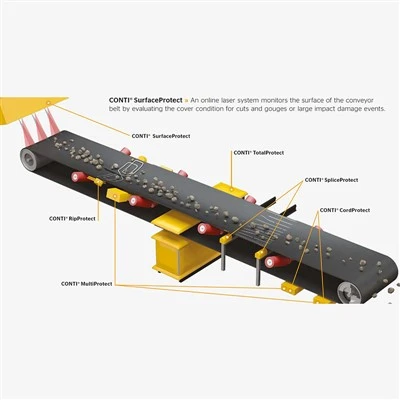
First, let’s get one thing straight: steel cord belts aren’t the same as old-school fabric belts. Fabric belts have their perks, but they’re way more flammable—you’ve probably seen (or heard stories) of a spark from a conveyor igniting dust and turning the whole run into a disaster. Steel cord belts are different because of what’s inside: braided steel cables instead of fabric plies. But wait, the steel itself doesn’t burn, right? So why don’t all steel belts work for high-fire-risk sites? That’s the part most people miss. The rubber compound covering those cords is where the magic happens. Our team works directly with our rubber chemists (I grab coffee with two of them every Friday, actually) on this—we use a specific blend of nitrile rubber mixed with zinc borate and aluminum trihydrate. Those aren’t just random chemicals; they’re tested to not melt when heated to 1,800°F, which is way hotter than any spark or small fire you’d get at a worksite. Here’s how that works in real time: if a small flame touches our belt, the aluminum trihydrate releases water vapor as it heats up, which snuffs out the flame instantly—no fuel left to keep it going. The zinc borate forms a thin, hard ash layer on the surface that seals off any oxygen, so the flame can’t spread to the rest of the belt. And the steel core? It stays intact, so the belt doesn’t snap mid-run when you need it most. I learned this the hard way a few years back: a mining customer of ours tested a competitor’s steel belt after a spark hit it, and the rubber melted through, while ours had zero damage beyond a tiny surface mark. That’s the stuff that matters.
Now, let’s talk about the standards, because if you’re buying fire-retardant belts, you can’t just take a sales guy’s word for it. I’ve had OSHA inspectors show up at our warehouse asking for test reports, so I know this part inside and out. Our belts meet both MSHA (Mining Safety and Health Administration) and ISO 340 standards—those are the big ones for heavy industry. MSHA’s test is super strict: they put a 12-inch flame directly on the belt for 3 minutes, and the belt can’t burn more than 2 inches beyond the flame area, plus it has to self-extinguish within 10 seconds of the flame being removed. Our belts pass that every single time—we’ve never had a test fail, and I keep a stack of test certificates in my truck for when customers want to see them right away. The ISO standard is for longer-term fire resistance, like if there’s a small smolder for a while, and our belts pass that too, which is why we sell so many to quarries and power plants where coal dust is a constant risk. Most of the smaller suppliers cut corners here—they’ll use a cheap rubber blend that meets the minimum MSHA test but falls apart in a real, prolonged fire. I had a customer from a coal plant call me last year crying because their old belt burned through during a minor equipment fire, and they lost $20k in downtime. We replaced it with our fire-retardant steel cord belt, and 18 months later, they texted me a photo of a small fire that started on the run—our belt was untouched. That’s the ROI right there, even if our belts are a little pricier upfront.
Wait, but what about other fire risks people don’t think about? Like static electricity? A lot of conveyor belt fires start from static buildup, especially in sites with dry air or dusty materials. Our steel cord belts actually help with that too—because the steel core conducts static away, instead of letting it build up on the rubber surface until it sparks. I can’t tell you how many times a customer has told me they had static sparks with their old fabric belts, then switched to ours and haven’t had that issue once. The rubber blend we use also has a tiny amount of carbon black mixed in (we use a special grade, not the cheap stuff) that boosts conductivity without messing with the fire-retardant properties. That’s a double win—you get fire resistance and static protection in one belt, so you don’t have to buy extra add-ons to keep your site safe. I used to sell belts that only did one or the other, but after a fire at a sand and gravel site a few years ago where static was the cause, we adjusted our blend to hit both needs. That’s how we run things here: we listen to what customers actually face, not just what the marketing brochures say.
Let’s get real about what doesn’t work. I see so many “fire-retardant” belts on Alibaba and other sites that claim to be compliant but skip the real tests. Last month, a small construction company bought a cheap steel belt from overseas for their aggregate conveyor, and when they did their pre-start fire test, the rubber melted in 45 seconds. They called me panicking because their OSHA inspection was in a week, and they were gonna get fined $12k. We rushed them a custom-sized belt, and their inspector passed with flying colors. The difference? The cheap belt used a rubber blend with no zinc borate or aluminum trihydrate—just regular styrene-butadiene rubber that burns like paper when heated. Those suppliers don’t invest in testing, so they can sell belts for half the price, but they’re a ticking time bomb. Our belts go through third-party testing every 6 months, not just once for certification. We also have a full in-house testing station at our warehouse—my team will hold a torch to a scrap piece of belt just to show customers what happens. I did that last week for a guy from a mining company who was on the fence, and he left with an order that same day. Nothing convinces like seeing it with your own eyes, right?
Another thing: our steel cord conveyor belts keep their fire-retardant properties over time, not just when they’re new. That’s a big complaint I hear about some brands—their belts work for the first year, then start losing fire resistance because the rubber degrades from heat, sun, or chemicals. We use a UV stabilizer and anti-aging additive in our rubber blend, so even after 5 years of use (which is the average lifespan for steel cord belts), they still pass the MSHA flame test. I had a customer from a gold mine tell me last year that their first set of our belts lasted 7 years, and when they tested a scrap piece, it still self-extinguished within 8 seconds. That’s important because if your belt loses its fire protection, you’re not just risking downtime—you’re risking workers’ safety, and no price tag is worth that.
Now, let’s talk about how we make sure every belt we ship is up to snuff. Before we roll any belt out of our warehouse, we do a quick field test: we use a small heat gun to spot the surface, and check that the flame stops immediately and doesn’t spread. It’s not a replacement for full third-party testing, but it catches any batch that might have a bad rubber mix. We also label every belt with a QR code that links to its test certificate, so you can scan it right from the site and see exactly when it was tested and what results it got. A lot of suppliers hide that info, but we put it front and center because we have nothing to hide. I’ve had inspectors scan those QR codes during audits, and they’ve all commented on how transparent we are.
Here’s the thing: I’m not gonna lie to you. No conveyor belt is 100% fire-proof. If you have a full-blown, sustained fire from something like a gas line rupture, even the best fire-retardant belt might sustain damage. But our belts are designed to contain small fires— the ones that start from a spark, a faulty bearing, or a small dust ignition—before they turn into a disaster. That’s the sweet spot for most sites. I’ve seen way too many site managers try to cut costs on fire safety only to end up paying way more in downtime, fines, or even worker injuries. A good steel cord conveyor belt is an investment, not an expense. When you choose our fire-retardant steel cord belts, you’re protecting your crew, your equipment, and your bottom line.

If you’re in the market for a new conveyor belt, or if your current belt isn’t passing fire tests, or you just wanna see how our belts hold up to heat, hit us up. We can send you a free sample, walk you through our test results, and even help you pick the right size and thickness for your site. No pressure, no sales pitch—just real answers from someone who’s been doing this for 10 years, and has seen both the good belts that save sites and the bad ones that cause headaches. Fire safety isn’t something to mess around with, and your conveyor belt is your first line of defense. Let’s make sure you’ve got the right one.
References
PVG Conveyor Belt MSHA Part 18 Subpart E – Fire Resistance Standards for Conveyor Belts
ISO 34:2015 – Rubber and Plastics – Determination of Burning Behavior of Conveyor Belts
National Fire Protection Association (NFPA) 70 – Electrical Standard for Static Control in Industrial Facilities
Conveyor Equipment Manufacturers Association (CEMA) – Best Practices for Fire-Retardant Conveyor Belt Selection
Alumina Technology (Qingdao) New Materials Co., Ltd.
As one of the most professional steel cord conveyor belt manufacturers and suppliers in China, we also support customized service. With abundant experience, we warmly welcome you to buy steel cord conveyor belt for sale here and get quotation from our factory. For price consultation, contact us.
Address: No.448, Jiangshan South Road, Huangdao District, Qingdao City, Shandong Province
E-mail: Gloria.zhang@contitech.cn
WebSite: https://www.altechconveyorbelt.com/
