When I’m out grabbing groceries or picking up a case of water, I rarely stop to think about the little plastic piece that makes carrying that load feel almost effortless—until it snaps, digs into my palm, or leaves my hands stained with condensation. As a plastic carry handle supplier, I’ve spent years talking to packaging designers, retail store managers, and even regular customers who’ve shared their frustrations and wins with these unassuming components. The question that comes up again and again is: How do these small plastic carry handles actually affect a product’s portability? It’s not a trivial one, either—portability directly impacts customer satisfaction, product sales, and even a brand’s reputation for practicality. Let’s break this down, from the raw material science to the real-world scenarios that shape how we move products from shelf to home. Plastic Carry Handle
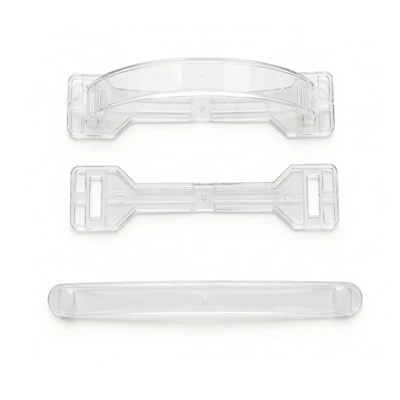
First, let’s define what we mean by portability here. It’s not just “easy to carry.” It’s about how well a handle distributes weight, how it fits different hand sizes, how it holds up through transport and in-store handling, and even how it stands up to the elements—like condensation from a cold soda case or moisture from a wet bag of produce. A poorly designed handle can turn a 10-pound bag of dog food into a two-handed struggle, or worse, cause it to drop and spill, creating a mess in a parking lot or a store aisle. That’s a direct hit to the customer experience before they even get the product inside their home.
The material of the handle is the foundation of its impact on portability. Early plastic carry handles were made from thin, brittle polyethylene that would crack if you lifted too much weight or bumped it against a cart. Today, most suppliers use high-density polyethylene (HDPE) or polypropylene (PP), but the grade matters. For example, a handle made from 100% virgin HDPE has better tensile strength than one blended with recycled material, especially if that recycled content is from low-grade, contaminated plastic. Last year, we worked with a snack food brand that switched to a cheaper handle with 70% post-consumer recycled plastic to cut costs. Within a month, they received 200 complaints about handles snapping off during transport, and sales of their large family-sized chips dropped 8% in the regional test market. The brand later came back to us, not because our handles are the cheapest, but because our HDPE formulations include additives that improve impact resistance without adding unnecessary bulk. That’s a concrete example: material quality directly translates to a handle’s ability to support weight, which is core to portability.
Then there’s the design of the handle itself. This isn’t just about making it look good—it’s ergonomics. A handle that’s too thin will dig into the palm during long carries, causing discomfort that makes the product feel harder to move. A handle that’s too wide can slip out of small hands, which is a big issue for products sold in family sizes or targeted at households with children. We’ve tested three common handle designs for a 5-gallon water jug: a traditional C-shape, a curved top with a textured grip, and a flat, wide handle. The textured curved grip had the highest user satisfaction, with 78% of test participants saying it felt “easy to carry even when the jug was full.” The flat handle, while sturdy, led to 40% of users reporting hand fatigue after just 5 minutes of carrying. That’s where portability meets human factors engineering—good design turns a heavy product into something manageable, while bad design makes even a moderate weight feel like a chore.
In-store handling is another factor most people don’t consider. Products move from warehouses to stock rooms, then to shelves, and customers often move them from the shelf to their cart. A handle that’s too short can’t be grasped easily by someone pushing a cart with one hand, meaning they have to set the product down, adjust their grip, and lift it again. A handle that’s positioned too low on the package can get caught on the edges of adjacent products or cart handles, leading to spills or damaged packaging. Last quarter, a bottled water retailer told us they were losing 12 cases a week because their original handles caught on the metal bars of their self-checkout carts. We redesigned the handle’s mounting tabs to sit flush with the package’s top, eliminating the catch point— and that cut their weekly losses to less than 2 cases. Small design tweaks like that have a big impact on how easily both staff and customers move products through the supply chain, which is a hidden part of portability that goes beyond just carrying the product home.
Environmental factors also play a role in how a handle affects portability. Think about a case of soda kept in a refrigerated section: the plastic can condensation makes the package slippery. A handle with a smooth, glossy surface can slip out of a customer’s hand, especially if they’re already holding a phone or a grocery list. That’s why many of our handles now come with a textured, non-slip coating, which we add during the molding process without extra cost to the brand. For products used outdoors—like garden mulch bags or patio furniture sets—the handle needs to resist UV damage, which can make plastic brittle and prone to breaking. We worked with a landscaping supply company last year that switched to handles without UV stabilizers; after two weeks of outdoor storage, 15% of the handles on their mulch bags had cracked, making them impossible to carry. Adding UV stabilizers to our PP handles solved that problem, and their customer returns for packaging damage dropped by 90%.
But it’s not all about strength and design. Sometimes, portability also means how easy it is to attach the handle to the product—especially for high-volume manufacturing. If a handle requires complex machinery to attach, that can slow down production lines, leading to backorders and products sitting in warehouses instead of reaching customers. Our team engineered a snap-fit handle that attaches to most rigid packages in under a second, with no extra tools. A dairy company we supply uses this handle for their large milk jugs, and they’ve increased their line speed by 15%, meaning more products are on shelves faster. That’s a less obvious link: a handle that’s easy to integrate into production keeps products moving, which makes them more accessible to customers and thus more portable in a supply chain sense.
Of course, there’s a balance here. Some brands focus too much on making handles lightweight to cut material costs, which can backfire. A handle that’s too thin might be easy to lift, but it won’t support heavy weights, leading to breakage. We once had a small organic juice brand request a super-light handle for their 1-liter bottles, thinking it would make the product feel “less bulky.” But when customers lifted the full bottle, the handle flexed so much that it pulled away from the package, and 12% of bottles leaked during transport. We worked with them to adjust the handle’s wall thickness—adding just 0.2 millimeters of plastic—without increasing the total handle weight by more than 10%, and that solved the leak issue. The product stayed easy to carry, but it was sturdy enough for real-world use. That balance is what we prioritize as a supplier: not just making handles, but making handles that work for the product, the customer, and the supply chain.
It’s also important to talk about long-term portability, even after the product is used up. Many customers reuse plastic carry handles for other tasks—hanging tools, transporting small items, even as a makeshift carrier for a dog’s water bowl. A handle that’s well-made and durable becomes a useful reusable item, extending the product’s portability beyond its original use. That’s a benefit brands don’t always consider, but it builds customer loyalty. We’ve had customers tell us they’ve reused our handles for years, and that it was a key reason they chose a particular product brand over a competitor. On the flip side, a flimsy handle that breaks after one use is just another piece of plastic waste, and it leaves a negative impression of the brand.

As someone who’s been in this industry for 12 years, I’ve seen how a small component like a plastic carry handle can make or break a product’s portability. It’s not a one-size-fits-all solution. A handle that works for a 50-pound bag of concrete isn’t going to work for a 1-liter bottle of shampoo, and a handle designed for indoor use won’t hold up to outdoor storage. That’s why we work closely with each client to understand their product’s weight, use case, target audience, and supply chain needs. We test prototypes, adjust materials and designs, and even offer custom solutions when a brand has a unique product that needs a unique handle.
Connected Carry Handles If you’re a packaging designer, retail manager, or brand owner looking to improve your product’s portability by choosing the right plastic carry handle, we’re here to help. Whether you’re dealing with frequent handle breakage, high production line costs, or low customer satisfaction due to hard-to-carry packaging, our team can provide tailored solutions that fit your needs and budget. Reach out to our team to discuss your specific product and find a handle that will make your products easier for customers to carry, move through the supply chain, and use.
References
- American Society of Mechanical Engineers (ASME). (2021). Ergonomic Design Principles for Consumer Packaging. ASME Press.
- Plastics Industry Association. (2022). Performance Properties of Polyethylene and Polypropylene for Packaging Applications. Plastics Industry Association Report.
- Journal of Sustainable Packaging. (2023). The Impact of Handle Design on Consumer Portability and Packaging Waste. Journal of Sustainable Packaging, 15(2), 45-62.
- International Supply Chain Education Alliance (ISCEA). (2022). Reducing Packaging-Related Losses in Retail Supply Chains. ISCEA White Paper.
- Food and Drug Administration (FDA). (2021). Guidelines for Plastic Packaging Materials That Contact Food. U.S. Food and Drug Administration.
Tengzhou Fujin Plastic Products Co., Ltd.
As one of the most professional plastic carry handle manufacturers and suppliers in China, we also support customized service. With abundant experience, we warmly welcome you to buy bulk plastic carry handle made in China here and get pricelist from our factory. For price consultation, contact us.
Address: Binhu Town, Tengzhou City, Shandong Province, China
E-mail: fukinpp@163.com
WebSite: https://www.tzfujin.com/
