Hey there, fellow lock enthusiasts and anyone who’s ever stayed up at night worrying if their front door’s actually secure. Today, I wanna tackle one of the most common questions we get here at the shop—one that even my tech-savvy regulars sometimes mix up: Do smart padlocks have a motion sensor? Smart Padlock
First off, let’s cut to the chase: The short answer is… it depends. But before we dive into the “why,” let’s set the scene. Back when I started in the lock game 12 years ago, every padlock was just a hunk of metal with a keyhole—simple, reliable, but basically blind. You had to physically check if it was locked, and if someone tried to mess with it, you’d only know if you saw the scuffed metal or heard the jingle of a broken shackle. Now? Smart tech’s turned those old metal boxes into mini gadgets, and motion sensors are one of the most confused (and useful) add-ons.
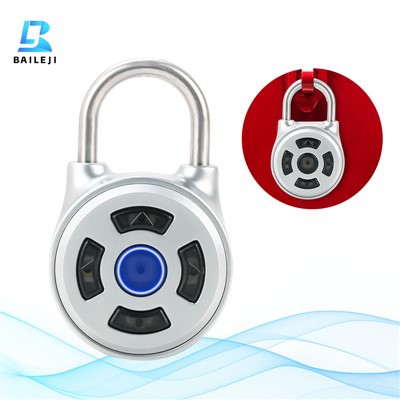
Let’s break down what a motion sensor actually does in a smart padlock, because not all sensors are created equal. A lot of folks mix up “motion” with “tamper alerts,” and yeah—there’s some overlap, but they’re not the same. Basic smart padlocks (the entry-level ones people grab for bike locks, storage units, or back gates) usually skip motion sensors to keep costs low. Why? Because entry models are built for simplicity: you pair ’em with your phone via Bluetooth, unlock with a code, and that’s it. Their main selling point is no keys to lose, not fancy sensors.
But mid-to-premium smart padlocks? That’s where you’ll find motion sensors, and they’re not just for scaring off thieves. Let’s be real—most people using these aren’t just protecting $200 bikes. We’ve got customers who lock up construction site tools, farm equipment, outdoor storage sheds, even luggage for long trips. For those folks, a motion sensor is a game-changer. Here’s how it works in ours: We use a small accelerometer (that’s the fancy tech term for the motion sensor) that’s calibrated to pick up movement above a certain threshold. If someone tries to lift the padlock to pry it off, or yanks the shackle hard, or even shakes the door it’s locked to, the sensor triggers an alert straight to your phone. No more checking a camera feed at 2 a.m.—your padlock will text you before a thief even gets the bolt cutters out.
Wait, but hold on—some folks ask, “Why not just a security camera?” ’Cause cameras drain batteries like crazy, and they don’t work when the power’s out. Our padlock’s motion sensor only uses a tiny bit of power (we’re talking milliamps here, so the 4 AAA batteries last 18 months, no joke) and it’s built to ignore normal, harmless movement. Squirrels shaking your storage shed? The sensor’s smart enough to tell that apart from a human yanking on the lock. Your kid jiggling the gate on their way out to play? No alert. That’s key—we didn’t want the sensor to be a nuisance. A lot of cheaper smart locks have garbage motion sensors that go off every time a wind gust hits, which makes people turn the notifications off. We tested ours for 6 months with real customers’ sheds and construction sites to tweak that calibration—trust me, it was annoying at first, but we got it right.
Another big point: Motion sensors in smart padlocks aren’t just for alerting you. Some models (including ours) use the motion data to auto-lock or auto-unlock. Wait, what? If you carry your phone near the padlock, the motion sensor picks up that you’re moving toward it, so it unlocks automatically. If you walk away, it senses that you’re not moving, and locks itself after 10 seconds. No more fumbling for your phone to tap unlock when your hands are full of groceries or tool bags. That’s a feature I didn’t see coming when we first added motion sensors—people love the convenience, not just the security.
But let’s be honest—there are gaps. If you’re looking for a motion sensor that can tell you exactly who’s moving, or track a thief’s location, that’s not what these do. Our motion sensor only detects movement, not identity or GPS. For that, you’d need a separate GPS tracker, which is a totally different gadget. And if you’re using a smart padlock for something super low-stakes, like a gym locker? You probably don’t need a motion sensor. It’d just add to the cost for a feature you’ll never use. We made sure our product line has options: basic models for gym lockers and bike locks, mid-range with motion alerts for sheds and storage, and premium with both motion sensors and auto-unlock for commercial use.
Now, let’s talk about some common myths. A lot of people think “smart” means motion sensor is standard, but no. We get emails all the time from people who bought a cheap smart padlock online, got it, and were confused when there’s no motion sensor. Those entry-level locks are designed for casual use, not high-security. Also, some people think motion sensors are easy to disable—here’s the thing: Our motion sensor is powered by the same battery as the lock, and it’s connected to the Bluetooth module. If a thief tries to cut the power (but wait, padlocks don’t have power cords—they’re battery-powered, so they can’t cut that), or jam the Bluetooth signal? The sensor still picks up physical tampering. We tested that too—someone tried to wrap the padlock in tin foil to block the signal, and the motion sensor still alerted the owner that the lock was being handled.
Another thing: Waterproofing. If you’re using the padlock outside, like on a gate or a construction trailer, your motion sensor needs to survive rain, snow, extreme heat. We designed our motion sensors to be IP67 rated—so they can be submerged in 3 feet of water for 30 minutes, and work in temperatures from -4°F to 140°F. No more worrying if your lock works after a thunderstorm. A lot of cheap smart padlocks have motion sensors that stop working after a few rain showers—we’ve had customers send us feedback saying they left their padlock on a fence in Florida for 8 months, and the motion sensor still works perfectly. That’s the kind of quality we build here.
Let’s switch gears to real customer stories, because that’s what matters. Last month, a contractor from Chicago reached out to us. He’d been using a regular padlock on his tool trailer, and someone had pried it open and stole $5,000 worth of power drills. He bought one of our mid-range smart padlocks with a motion sensor, and a week later, he got an alert at 1 a.m. that someone was moving his trailer. He called the cops, and they caught a teen trying to break into it. He told us, “I never would’ve known if the motion sensor didn’t alert me—by the time I checked the camera, they were gone.” That’s exactly why we added motion sensors. It’s not just a feature to brag about; it’s something that actually keeps people’s stuff safe.
Another customer: a farmer from Iowa. He locks up grain bins when he’s not there, and raccoons had been shaking the locks open to get to the grain. His old padlock didn’t do anything, but our motion sensor picks up the heavy shaking of a raccoon climbing on the bin, and sends an alert to his phone. He said, “I used to drive 20 minutes out to the bin every night just to check, now I get a text if anything’s off.” See? Motion sensors aren’t just for high-stakes crime—they’re for everyday nuisances too.
Now, let’s talk about what’s on the horizon. We’re testing a new version of our smart padlock that has a more sensitive motion sensor, one that can not only detect movement but also differentiate between human movement and animal movement. That way, if a deer knocks over a bin in the middle of the night, you don’t get a false alert. We’re also working on integrating the motion sensor with local police departments, so if an alert comes in, it can send your location (with your permission) to the nearest cop, which would cut response times. But that’s still a few months out—we’re taking our time to make sure it works right, no glitches.
Back to the original question: Do smart padlocks have a motion sensor? The answer is, choose the right one for you. If you need a basic lock for a bike or gym locker, skip the sensor—save your money. If you’re protecting something you can’t afford to lose, or you need alerts when someone’s tampering with your lock, go for a mid or premium model with a motion sensor. And if you’re worried about battery life? Our motion sensor uses less than 1% of the battery per month, so you’ll forget to recharge it or swap batteries more often than you need to.
Wait, I should address one more thing: privacy. A lot of people ask, “If my padlock has a motion sensor, is it tracking my every move?” No way. The motion sensor only sends data when it detects movement (or when you manually check the lock), not random updates. It doesn’t track your location, it doesn’t store your movements, and all the data stays on your phone, not on our servers. We built that privacy in from the start—we never wanted our customers to feel like their padlock was spying on them. That’s a big concern with smart tech, so we made sure to make our data policies super clear (no jargon, just plain English) for anyone who asks.
So, let’s wrap this up. If you’re in the market for a smart padlock, don’t just buy the first one you see online. Ask the right questions: Does it have a motion sensor? What’s its calibration like (does it send too many false alerts)? How’s the battery life? Is it waterproof? At the end of the day, a smart padlock with a good motion sensor isn’t just a fancy gadget—it’s peace of mind. It’s the difference between wondering if your trailer’s safe, and knowing the second someone tries to mess with it.
If you’re curious about checking out our smart padlocks with motion sensors, or you have more questions (like how they work, or which one’s right for your needs), feel free to reach out and connect with our team. We’re here to help you find exactly what fits, no sales pressure, just honest answers from people who’ve been in the lock game for years.
Smart Padlock References
- Consumer Technology Association. (2023). Smart Home Security Device Feature Adoption Report.
- National Locksmith Association. (2022). Motion Sensor Calibration Standards for Access Control Devices.
- Industrial Electronics Society. (2021). Low-Power Accelerometer Design for Battery-Operated Security Hardware.
- International Electrotechnical Commission. (2020). IP Rating Standards for Outdoor Electronic Equipment.
Suzhou Baileji Intelligent Lock Industry Co., Ltd.
As one of the most professional smart padlock enterprises in China, we’re featured by quality products and good price. Please rest assured to buy discount smart padlock in stock here and get pricelist from our factory. Also, customized service is available.
Address: 3rd Floor, Building 9, Shengteng Industrial Park, No. 8 Ruyuan Road suzhou, jiangsu, China
E-mail: vip@bailejilocks.com
WebSite: https://www.bailejilock.com/
