Hey there, if you’ve ever dabbled in sensor tech, you know the processor is the unsung hero—turning raw, noisy sensor data into something actually useful, right? But picking the right dev platform for that processor can make or break your project, whether you’re building a smart thermostat, industrial IoT monitor, or even a wearable fitness tracker. As a sensor processor supplier, I’ve talked to so many teams stuck juggling tools that don’t sync with their chips, wasting weeks on fixes instead of building cool stuff. Today, let’s break down the dev platforms that actually work for sensor processors, no corporate jargon, just real talk from someone who’s been in the thick of it. Sensor Processor
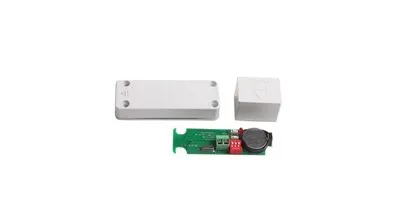
First, let’s get one thing straight: sensor processors aren’t your average CPUs. They’re built to handle low-power, real-time sensor data—think a tiny MCU in a smart smoke detector that needs to run on a coin battery for 10 years, or a high-performance edge processor for a factory floor that’s crunching data from 20 sensors at once. So a dev platform that works for a gaming PC? Total waste here. The best platforms balance three big things: ease of use for your team, compatibility with your specific sensor processor, and the power to tweak for your unique use case.
Let’s start with the most common one you’ll hear from small startups and hobbyists: Microcontroller (MCU) Dev Platforms, especially the ones paired with 8/16-bit sensor MCUs. Wait, why those? A lot of basic sensor projects don’t need fancy processing—they just need to read a temperature or motion sensor, filter the noise, and send a quick alert. Platforms like Arduino, ESP-IDF (for ESP chips), and STM32CubeMX are the go-to here, and for good reason. Let me give a quick example: last quarter, a team working on affordable agricultural soil moisture sensors hit me up because their initial build was clunky. They were using a generic dev board not matched to our low-power sensor processor, so their battery died in 2 weeks. We pointed them to our processor’s compatible Arduino-based dev platform, which had pre-written libraries for the capacitive soil sensors they were using, plus built-in power management tools that cut idle current by 70%. They got their project out 3 weeks earlier, and now they’re ordering 10k processors for mass production. That’s the real value here.
Arduino’s big win is its simplicity. If your team has someone who’s good with basic C++ but not a hardware engineer, you can hook up a sensor, copy-paste a library example, and have data streaming in 10 minutes. But it’s not perfect—if you’re pushing your sensor processor to its limits, like running real-time edge AI for a door lock that recognizes your fingerprint, Arduino’s abstraction layers can hold you back. That’s where the next platform comes in: Custom MCU SDKs (Software Development Kits) for your specific sensor processor.
Wait, let’s clarify: a lot of suppliers, including us, build custom SDKs tailored to our sensor chips. These aren’t one-size-fits-all—they’re optimized for the processor’s architecture. For our sensor processors, our SDK includes drivers for every common sensor (temp, accelerometer, gyro, etc.), power management configurations tailored to how our chip runs, and even debug tools that let you see exactly where power is being wasted. I’ll admit, when I first got into sensor processing, I thought “why make a custom SDK when Arduino works?” But then a industrial client needed a processor that could run 4 concurrent sensors while using less than 1mA of current. The generic Arduino library for their sensor was drawing 3mA just to sample data. Using our custom SDK, we tweaked the sensor’s sampling interval, turned off unused peripherals, and cut that current to 0.8mA. That’s the difference between a product that needs a battery change every month and one that lasts 5 years.
Next up, edge AI Dev Platforms for high-performance sensor processors. These are for teams building stuff like smart cameras, industrial predictive maintenance tools, or wearable health monitors that need to process sensor data right on the device (no sending it to the cloud, which is slow and risky). Platforms like TensorFlow Lite for Microcontrollers (TFLite Micro), Google’s Coral Dev Board, and our own edge-optimized dev kits are big here. Let’s talk about a recent use case: a medtech startup we partner with was building a portable ECG monitor. They needed a sensor processor that could filter noisy ECG data, detect irregular heartbeats, and send an alert—all without relying on cell service. They tried a generic edge platform, but it didn’t support the DSP (digital signal processing) features our sensor processor has, so their model had 20% higher false positive rates. We recommended our edge dev platform, which integrates TFLite Micro with our chip’s DSP acceleration. They retrained their heartbeat detection model to run on our processor, and false positives dropped to under 2%, plus the whole unit runs on a single coin battery for 6 months. That’s the kind of outcome that makes the right dev platform non-negotiable.
Here’s a mistake I see a lot of teams make: they pick a dev platform first, then buy a sensor processor that fits it, instead of the other way around. For example, if you want to build a low-power wearable, don’t grab a high-performance edge board if you don’t need it—you’ll pay 3x more for power you’re not using, and your dev time will be longer because the platform has extra features you don’t need. Conversely, if you’re building a machine vision sensor, a basic Arduino platform won’t let you process the high-resolution image data fast enough. It’s all about matching the platform to your processor and your use case.
Another category you might not hear about as much: Open-Source Hardware (OSH) Dev Platforms. These are boards like the Raspberry Pi Pico W, Adafruit Feather, or custom open-hardware sensor boards that let you see exactly how the processor is wired, no proprietary design locks. Why would you use these? If you’re a hardware engineer who wants to tweak the sensor’s circuit design, or if you need to integrate our sensor processor into a custom board for a product that’s going to be mass-produced (think 100k+ units). Last year, a client in the smart packaging space used an open-source ESP32-based dev board to prototype a temperature sensor that tracks food shipments. They later switched to our sensor processor, but used the OSH dev platform’s open schematics to design their mass-production board, cutting their prototype cost by 40%. That’s huge for startups working on tight budgets.
Wait, let’s talk about what to look for in a dev platform, beyond just compatibility. First, libraries—does the platform have pre-written drivers for the sensors you’re using? If you’re working with a niche sensor (like a gas sensor for industrial use), a generic platform might not have a driver, and writing one from scratch can take weeks. Second, debug tools—can you see real-time data from the sensor, track power usage, and fix errors without needing a $1000 oscilloscope? Our dev platform includes a serial monitor that lets you log every sample from the sensor and check power draw with a single click. Third, community support—if you hit a bug, can you ask a question on a forum and get an answer, or do you have to wait for your supplier’s support team? The Arduino community is massive, so if you’re new to sensor processing, that’s a big plus.
I also want to call out the elephant in the room: cloud-integrated dev platforms, like AWS IoT Core or Microsoft Azure IoT Developer Kit. These are for teams that want to connect their sensor devices to the cloud for data storage or analytics, not just process data on the edge. For example, a logistics company might use sensors to track the temperature of shipping containers, and they need to send that data to the cloud for long-term analysis. The cloud dev platforms integrate with our sensor processors, let you set up data pipelines, and even build dashboards to monitor your devices. But here’s the catch: if you’re building a low-power device, sending data to the cloud every minute will drain your battery fast. These platforms are great for larger devices, but not ideal for battery-powered small sensors.
Let’s wrap this up with a real scenario to tie it all together. Imagine a startup that wants to build smart water meters for residential homes. The meter needs to read flow rate, track usage, send alerts when there’s a leak, and run on a battery for 10 years. Here’s what they should do: first, pick our low-power sensor processor, which has built-in flow sensor drivers and power management. Then, use our custom SDK as the main dev platform—its pre-written flow sensor library cuts their dev time in half, and the power tools let them optimize the processor’s sleep mode to get 10 years of battery life. If they need to connect to the cloud to let homeowners check usage on an app, they can add a cloud dev platform like AWS IoT Core, which integrates with our processor. If they want to prototype fast, they can use an Arduino-compatible dev board that works with our processor, no custom wiring needed.
Here’s the thing: as a sensor processor supplier, we don’t just sell chips—we sell dev platforms that are built to work with our chips, because we know how critical that is for your project. Too many suppliers just give you a datasheet and say “good luck,” but we’ve spent years optimizing our SDKs, dev kits, and edge platforms to make sure you don’t waste time fixing issues that shouldn’t exist. Whether you’re a hobbyist building a garden sensor, a startup building a medtech device, or an industrial team building a factory monitor, there’s a dev platform that fits your sensor processor and your needs.
Integrated Safety Edge If you’re currently stuck trying to pick a dev platform for your sensor processor, or if you’ve hit a wall with your current setup, reach out—we’re here to help you figure out what works for your project. No sales pitches, just real talk from a team that builds sensor processors and uses those same dev platforms every day.
References
- “Low-Power Sensor Processing: Design Principles and Platforms”, IEEE Sensors Journal, 2022
- TensorFlow Lite Micro for Edge Devices, Google Developers, 2023
- “Open-Source Hardware for Sensor Prototyping”, Journal of Open Hardware, 2021
- STMicroelectronics STM32Cube SDK Overview, STMicroelectronics, 2024
- Edge AI in Medical Sensor Devices, Nature Biomedical Engineering, 2023
Ningbo Futai Safety Edge Technology Co., Ltd.
Ningbo Futai Safety Edge Technology Co., Ltd. is one of the most professional sensor processor manufacturers and suppliers in China, also supports customized service. Please feel free to buy advanced sensor processor in stock here from our factory. Contact us for free sample and discount information.
Address: No. 1116, Beihuan West Road, Jiangbei District, Ningbo City, Zhejiang Province
E-mail: info@safety-edge.com
WebSite: https://www.safety-edge.com/
