If you’ve ever walked through a custom fabrication shop, you’ve probably seen sheet metal laser cutting machines in action: large, precise machines whizzing through flat steel, aluminum, or brass sheets, producing clean, accurate parts with almost no secondary finishing needed. But if you’re a fabricator who works with both flat sheets and tubular parts, or you’re just starting to expand your service offerings, a common question pops up: Can a standard sheet metal laser cutting machine also cut tubes? As a supplier who’s spent more than a decade working directly with fabricators, fielding these exact questions every single week, I can tell you the answer isn’t a simple yes or no—it depends on what kind of machine you have, how it’s set up, and what you’re trying to cut. Let’s break this down, because it’s a question that can make or break a fabricator’s ability to take on new jobs without having to invest in entirely new equipment. Sheet Metal Laser Cutting Machine
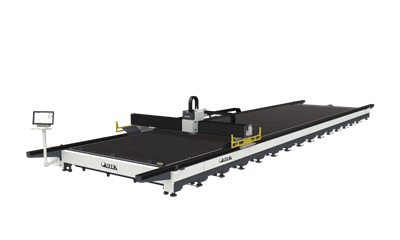
First, let’s get clear on what a standard sheet metal laser cutting machine actually does. Most of the machines we supply are designed around a flatbed worktable, where sheets of metal are clamped down, and a laser head moves along the X, Y, and Z axes to cut through material. The focus here is on flat, two-dimensional (or thin three-dimensional) parts: brackets, panels, enclosures, all the standard sheet metal components that make up everything from automotive parts to consumer electronics. These machines are built with enough power—usually between 1kW and 6kW of fiber laser power, the current industry standard—to cut through mild steel, stainless steel, aluminum, and copper up to 25mm thick, with a positioning accuracy of ±0.05mm or better. That precision is non-negotiable for sheet metal work, where even a 0.1mm error can throw off a fit between two parts.
Tubes, though, are a whole different geometry. Instead of flat, uniform sheets, tubes are hollow, cylindrical (or sometimes rectangular, square, or oval) profiles, with walls that can be as thin as 0.5mm or as thick as 20mm, and lengths ranging from a few inches to 20 feet or more. Cutting a tube isn’t just a matter of running the laser across it; you have to rotate and position the tube so the laser can cut along its circumference, at angles, or through multiple planes. That requires an additional axis of motion—usually called the rotary axis, or sometimes the B axis for angular cutting, or the C axis for rotating the tube itself.
So here’s the crux: a basic, entry-level sheet metal laser machine that only has X, Y, and Z axes, designed exclusively for flat sheets, cannot cut tubes. There’s no way to hold a tube securely on a flat worktable, no way to rotate it smoothly, and the machine’s software won’t be programmed to handle the curved path needed to cut around a cylinder. If you tried to jam a tube onto a flatbed, it would wobble, the cut would be uneven, and you’d almost certainly damage the laser head, the tube, or both. That’s a mistake we’ve seen fabricators make more than once, and it’s an expensive one—we’ve had customers come to us after ruining a $500 stainless steel tube and burning out a laser head on a machine that wasn’t set up for tubes.
But that’s not the end of the story. Many mid-range and advanced sheet metal laser machines—including most of the ones we design and supply—can be fitted with a tube cutting attachment that transforms them into a dual-use machine. Let’s talk about what that attachment entails, because it’s not just a add-on; it’s a system that has to be integrated seamlessly with the machine’s hardware and software.
First, the tube holding system: instead of a flat clamping bed, you add a rotary chuck or a set of vices that grip the tube at both ends (for long tubes) or along its length, keeping it rigid and aligned so it doesn’t shift during cutting. For tubes that are square or rectangular, the vices are designed to fit the sharp corners, while cylindrical tubes use soft, adjustable jaws to prevent marring the surface of the tube—important if the tube has a polished finish or is going to be used for decorative parts like railings or furniture. Some setups also include a tube loader, which automatically feeds tubes into the machine, so operators don’t have to manually load 10-foot tubes, reducing labor time and improving safety.
Next, the axis upgrade: to cut around the tube, the machine needs a C axis that can rotate the tube at consistent speeds, and a B axis (or sometimes a tilt axis) that lets the laser head move at an angle, so you can cut miters, slots, or holes that go through the wall of the tube at angles, not just perpendicular to it. A lot of people don’t realize that cutting a 90-degree notch in a tube for a plumbing part or a structural bracket requires the laser to follow a curved path along the tube’s circumference, which only works if the machine can move both the laser head and the tube rotation at the same time. Without that integrated motion, the cut would be a jagged, uneven mess that would require hours of grinding to fix.
Then there’s the software. This is where a lot of lower-quality machines fall short. The software for a dual-use sheet and tube laser isn’t just a flat sheet program with a tube add-on; it has to be able to nest tube parts efficiently, just like you nest flat sheet parts to minimize material waste. For example, if you need to cut five 6-inch long tubes from a 20-foot length of pipe, the software should automatically calculate the best way to arrange those parts on the tube to cut out as little scrap as possible. A good tube program will also handle different tube geometries—square, round, rectangular—without the operator having to manually input measurements for each one, which saves a ton of time and reduces human error.
Now, let’s get into the practical advantages of using a single dual-use machine for both sheets and tubes, because that’s why fabricators ask this question in the first place. Imagine you run a small custom fabrication shop that does both sheet metal enclosures and tubular handrails for a local construction company. If you have two separate machines—a sheet metal laser and a tube laser—you’re paying for two pieces of equipment, two sets of maintenance, and two operators. With a dual-use machine, you can switch between cutting a flat steel enclosure sheet one day and a set of square tube handrail parts the next, without needing to invest in a whole new line of equipment. That’s a huge cost saver, especially for small to medium fabricators who don’t have the budget for multiple high-end lasers.
But there are limitations, too, and it’s important to be honest about them. A dual-use sheet and tube laser isn’t going to match the performance of a dedicated tube laser for very large or very thick tubes. If you’re cutting 20-inch diameter steel tubes with 1-inch thick walls, a dedicated tube laser is designed to handle that size and weight, with a larger work envelope and more powerful clamping systems. A dual-use machine’s tube attachment will have a maximum tube diameter capacity—usually between 6 and 12 inches, depending on the model—so if you’re working with oversized industrial tubes, a dual-use machine might not be the right fit. Also, tube cutting takes up some of the machine’s work envelope, so if you’re cutting very large sheets (like 4×8 feet) and also very long tubes, you might run into space constraints on the flatbed.
Another limitation is speed. For thin tubes (under 3mm), a dual-use machine can cut just as fast as a dedicated tube laser, because the laser power is more than enough. But for thick tubes (over 10mm), a dedicated tube laser often has a higher power laser (up to 12kW or more) and specialized optics for cutting through round walls, so it can finish the cut much faster than a dual-use sheet metal laser. If your shop does a lot of heavy tube work for structural applications, a dual-use machine might not be the most efficient choice, even if it can handle the cut.
Now, let’s talk about the common mistakes we see fabricators make when they’re considering a dual-use machine, because that’s where experience matters. A lot of cheap, entry-level sheet metal machines claim to do “tube cutting,” but what they really do is a kludge—they add a basic rotary axis and a little software, but they don’t reinforce the machine’s frame to handle the weight of a long tube, or their software can’t handle angular cuts or part nesting for tubes. We’ve had customers bring those machines to us to service, because the rotary axis kept wobbling, the cuts were off by 1mm, and they couldn’t get the machine to cut a simple miter without the laser head crashing into the tube. That’s why it’s so important to work with a supplier who understands both sheet metal and tube cutting, not just a supplier who sells you a machine and doesn’t stand behind its capabilities.
One of the biggest benefits of working with a supplier like ours is that we don’t just sell machines—we help you match the machine to your specific jobs. If you’re a fabricator who mostly does sheet metal parts, but takes the occasional tube job for extra work, a mid-range dual-use machine is perfect. We can customize the tube attachment to fit the sizes of tubes you work with, train your operators on both flat sheet and tube cutting, and provide ongoing maintenance to keep both parts of the machine running smoothly. If you’re a larger shop that does equal amounts of sheet and tube work, we can recommend a higher-end machine with a larger work envelope and more powerful laser power for both applications. If you only do the occasional tube job, we can also advise on alternatives, like outsourcing tube cutting to a local shop, instead of investing in a machine that you might only use 10% of the time.
Let’s also talk about quality, because that’s what matters most to fabricators. When you cut a tube with a sheet metal laser that’s properly set up for tube work, the cut edge is just as clean as a flat sheet cut—no burrs, no rough edges, minimal heat affected zone (HAZ) that needs grinding. That’s important for parts that need to fit together tightly, like automotive exhaust tubes or structural brackets, where even a small HAZ can cause a part to not align properly. Dedicated tube lasers also produce clean cuts, but the difference in quality between a good dual-use machine and a dedicated one is negligible for most small to medium fabrication work. For decorative parts, like metal art or furniture, the clean edge from a dual-use machine means you don’t have to spend extra time finishing, which saves you labor costs and gets your parts to market faster.
Another point to consider is material flexibility. A good dual-use sheet and tube laser can cut the same range of materials for tubes as it does for sheets: mild steel, stainless steel, aluminum, copper, even brass. That means if you’re cutting a brass tube for a decorative lamp and a mild steel sheet for a lamp base, you can switch between jobs on the same machine without changing the laser settings, just like you would for two different sheet metal jobs. That’s another time saver, because you don’t have to re-calibrate two separate machines for different materials.
Now, let’s get back to the original question: Can a sheet metal laser cutting machine be used for cutting tubes? The short, honest answer is: It can, but only if it’s a machine that’s been designed or upgraded with a tube cutting system. Basic sheet metal machines, without that upgrade, can’t handle tubes safely or produce high-quality cuts. For fabricators who are looking to expand their service offerings without a huge capital investment, a dual-use machine is a great option. For those who do mostly heavy tube work, a dedicated tube laser is still the better choice.
If you’re a fabricator who’s considering adding tube cutting to your services, or if you have a standard sheet metal machine and want to know if you can upgrade it to handle tubes, the first step is to talk to a supplier who has real-world experience with both applications. Don’t just look for specs on a website—ask about the maximum tube diameter, the angular cutting capabilities, the software’s ability to nest parts, and the kind of support the supplier provides after the sale. At our company, we work closely with every customer to understand their current jobs, their future plans, and their budget, so we can recommend the right machine or upgrade that fits their needs, not just the most expensive one.

Don’t make the mistake of assuming all sheet metal machines can do tube cutting, or that tube cutting requires a whole separate machine. It’s a flexible option that works for many shops, but it’s important to go into it with your eyes open, understand the limitations, and work with a supplier who can help you make the right choice. If you’re ready to explore how a dual-use machine could work for your shop, or if you have specific questions about tube cutting capabilities for your existing equipment, don’t hesitate to reach out to our team to schedule a consultation. We’re here to help you make the most of your equipment and grow your business.
Material Storage and Automatic Loading/Unloading System References
- "Fiber Laser Cutting for Sheet Metal and Tubes: Capabilities and Limitations," Fabricating and Metalworking Magazine, 2022
- Dual-Use Sheet and Tube Laser Systems: A Guide for Fabricators, Laser Institute of America, 2021
- Tubular Laser Cutting: Best Practices for Small to Medium Fabrication Shops, SME (Society of Manufacturing Engineers), 2023
- Maintenance and Safety Guidelines for Integrated Sheet and Tube Laser Cutting Machines, International Association of Sheet Metal, Air, Rail and Transportation Workers (SMART), 2022
Suzhou Quick Laser Technology Co., Ltd.
Suzhou Quick Laser Technology Co., Ltd. is one of the most professional sheet metal laser cutting machine manufacturers and suppliers in China, featured by quality products and good price. Please feel free to buy durable sheet metal laser cutting machine for sale here from our factory. For more information, contact us now.
Address: No. 6, Qingqiu Street, Industrial Park, Suzhou, Jiangsu Province, China
E-mail: info@qlteklaser.com
WebSite: https://www.qlteklaser.com/
