Hey there! If you’ve ever stood in front of a self-service terminal (think grocery checkout kiosks, airport bag drop machines, or even pharmacy prescription pickup stations), you might’ve glanced at the metal locks, small cameras, or those blinking blue alert lights and thought, “Wait—do these things actually have built-in anti-theft stuff, or is that just for show?” As a self-service terminal supplier who’s talked to hundreds of operators over the years, this question comes up all the time. Spoiler: it’s not just marketing fluff. These days, self-service terminals (let’s just call them SSTs for short, ‘cause saying “self-service terminal” every time gets old) have a whole stack of anti-theft features baked in—some obvious, some you’d never notice until something goes wrong. Self-service Terminal
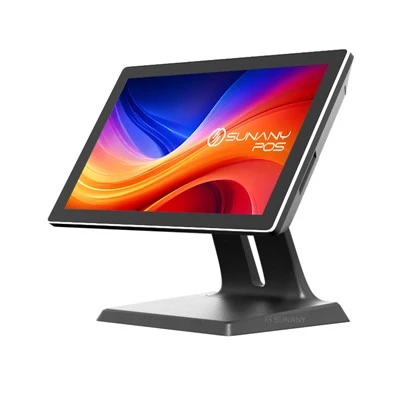
First, let’s start with the obvious stuff you can spot right away. Most SSTs have tamper-proof hardware, right? Not just a cheap padlock you can pick with a bobby pin. We use heavy-duty steel enclosures for the main body, and reinforced locks for access panels—like the ones that hold card readers, cash dispensers, or receipt printers. Wait, have you ever tried prying open an SST’s cash compartment? Even if someone’s got a crowbar, the panels are bolted to the frame with special screws that can’t be removed with a standard screwdriver. We call them “tamper-resistant screws,” and they’re a big one—way better than regular hex screws for keeping casual thieves out. Oh, and for terminals that handle cash (like self-checkouts at big-box stores), some have internal motion sensors that trigger an alarm if someone’s moving around the cash drawer too much, or if the main unit is tilted sharply. We even had a client last year who told us a would-be thief tried to drag a self-checkout out of a grocery store parking lot at 2 a.m.—the tilt sensor triggered a loud siren that scared the guy off before he could get 10 feet. That’s the kind of thing that works.
But not all theft is physical—there’s digital theft too, and that’s a huge part of anti-theft for SSTs these days. You know how when you tap your debit or credit card at a kiosk, it feels super secure? There’s a reason for that. Most modern SSTs use end-to-end encryption (E2EE) for all payment data. That means when you swipe, tap, or insert your card, the data gets scrambled before it even leaves the terminal, so even if someone intercepts it (skimmers, basically), they can’t read it. Wait, skimmers—those little devices thieves attach to card readers to steal card info—we design SSTs to be skimmer-proof too. We build card readers into the terminal’s body so they can’t be pried off easily, and we add anti-skimming software that checks for any unusual devices attached to the card slot. A lot of people don’t realize that half the “theft” around SSTs these days is digital, not physical—so anti-theft here is just as important.
Then there’s the stuff that’s not for the end-user to see, but keeps the terminal working and safe. We call them “remote monitoring and management tools.” Every SST we sell has 24/7 connectivity (either cellular or Wi-Fi, depending on the location) that lets our team, or the operator, check in on the unit at any time. If someone jimmies the access panel, the terminal sends an immediate alert to a central dashboard—like a text or email that says, “Terminal 3 at Main Street Grocery has a tamper event.” That’s way faster than someone having to walk by and spot it. And for terminals in public places, we integrate them with the local security system—so the tamper alert also triggers the store’s CCTV to start recording that area, and even sends a notification to on-site staff. We had a convenience store client in Texas tell us last year that their SST at the gas pump had a tamper alert go off at 1 a.m. Their security guard was at the terminal in 2 minutes, caught a guy trying to install a skimmer, and stopped him before he could steal any card info. That remote alert is a game-changer.
Wait, let’s talk about edge cases—like SSTs that are outdoors, like parking pay stations or outdoor ticket kiosks. Those have extra anti-theft features because they’re exposed to the elements and more likely to be targeted. We add vandal-proof coatings to the screens (so someone can’t slash the display with a knife) and weight sensors on the base—if someone tries to lift the terminal up, the weight change triggers an alarm, same as the tilt sensor. We also use what’s called “anti-climb” design for outdoor units—no handholds, no ledges someone can stand on to reach the top. A lot of people ask, “Why not just bolt the terminal to the ground?” Well, some places can’t drill into concrete, or the ground is loose (like a beachside parking lot), so these sensor-based features work just as well, and are more flexible for different locations.
But here’s the thing: anti-theft features aren’t one-size-fits-all. A self-checkout at a Walmart needs different stuff than a pharmacy prescription pickup kiosk or a museum ticket terminal. For example, a pharmacy SST doesn’t handle cash, so we focus more on digital anti-theft—like access controls that only let pharmacists override the terminal, and encryption for patient info (HIPAA-compliant, too, if that’s a requirement in the U.S.). A museum ticket terminal might handle cash and credit cards, so we add the physical tamper locks and tilt sensors, plus a camera that’s angled to capture anyone standing in front of it (for facial recognition, if the operator wants it, or just to have footage if something goes wrong). We customize each SST’s anti-theft features based on what the client needs—no one-size-fits-all, which is why a lot of big operators come back to us when they expand.
Now, let’s address a common myth: some people think, “If a thief really wants to steal an SST, they’ll find a way.” Yeah, maybe—but the anti-theft features we build in make it way more trouble than it’s worth. Thieves are lazy, right? They pick the easiest target. If one SST has a $50 worth of parts inside but 10 anti-theft sensors, and another has $50 parts and no sensors, guess which one they’ll go for. We’ve had clients run tests where they put a “fake” SST in a back alley with a visible skimmer and a tamper lock—no one touched it. The next week, they put a plain, unmodified SST in the same spot, and someone tried to break into it within an hour. That’s the reality: anti-theft features work because they deter, not just catch, thieves.
Wait, what about mistakes? Like, can a customer accidentally trigger an anti-theft alert? Yeah, sometimes—if a kid bumps a terminal hard enough, or someone leans on it too much. That’s why we tweak the sensor sensitivity based on the location. A terminal in a busy grocery store gets set to lower sensitivity, because there are way more people moving around it, but a terminal in a quiet office lobby gets set higher. We also train the operators to know that alerts happen sometimes, so they don’t panic every time a text comes through. It’s a balance between keeping thieves out and not annoying regular users.
Here’s a story that sticks with me from a few years back: a small coffee shop in Portland installed our self-ordering SSTs. A week later, they told us that a guy tried to steal the entire terminal. He rented a pickup, showed up at closing time, and tried to drag the SST out the front door. The tilt sensor went off, the alarm blared, and the shop owner (who was still cleaning up) ran out with a broom and chased him off. The SST had zero damage, because the anti-theft screws held the enclosure together, and the remote alert let the owner know what was happening before the guy could get away. That’s exactly what these features are for—protecting not just the terminal, but the operator’s money and data.
Now, if you’re an operator who’s looking to install SSTs, or replace old ones, the anti-theft stuff should be a big part of your decision, right? But don’t just take our word for it—look for features like E2EE for payments, tamper-proof hardware, remote alerts, and customizable sensitivity. A lot of cheaper SST suppliers skip those features to save money, but that’s a false economy—you’ll end up dealing with theft, skimmers, and downtime way more often.

At the end of the day, self-service terminals’ anti-theft features aren’t just fancy add-ons. They’re designed to protect your business, your customers’ data, and the terminal itself. They work on multiple levels—physical, digital, remote—and they’re tailored to where the terminal is and what it’s used for. If you’re curious about what anti-theft features would work best for your specific setup, or you’re ready to explore new SST solutions, hit us up to connect with our sales and engineering team. We can walk through your needs, show you real-world examples of how these features work, and help you pick a solution that’s secure, reliable, and fits your budget. Don’t wait until something goes wrong—proactive anti-theft is way easier than cleaning up after a theft or a data breach.
Terminal Self Checkout References:
- National Retail Federation. (2022). Self-Service Technology Security Report: Anti-Theft and Data Protection for Kiosks.
- International Organization for Standardization (ISO). (2021). ISO 27001: Information Security Management for Self-Service Terminals.
- U.S. Department of Homeland Security. (2020). Public Space Vandalism and Theft Prevention: Best Practices for Outdoor Self-Service Kiosks.
- Payment Card Industry Security Standards Council (PCI SSC). (2023). Payment Security Requirements for Self-Service Devices.
- Retail Technology Innovation Center. (2022). Case Studies: Anti-Theft Success Stories in Self-Checkout Kiosks.
Shenzhen Sunany Technology Limited
Shenzhen Sunany Technology Limited is one of the most professional self-service terminal manufacturers and suppliers in China, featured by quality products and good price. Welcome to wholesale bulk advanced self-service terminal made in China here and get pricelist from our factory. Contact us for customized service and OEM service.
Address: 7F, Building 2, Pingji Avenue No.13, Longgang, Shenzhen, China.
E-mail: info@sunany.com
WebSite: https://www.sunanypos.com/
