If you’ve ever stood in a production hall watching tiny circuit boards get marked with precision, or stared at a barcode scan fast enough to outpace a grocery store lane checker, you’ve interacted with a low power laser module—even if you didn’t notice it. I’ve spent the last eight years working with these little workhorses as a laser module supplier, and I still get asked the same question at trade shows, over Zoom calls, and even at backyard barbecues: “Wait, a laser that’s ‘low power’? Isn’t that just a pointer?” The short answer is no, and the long answer? It’s the backbone of thousands of everyday technologies that most people take for granted. Let me break this down, from what these modules actually are to why they matter, and how we build them to serve industries that need reliable, consistent performance. Laser Module
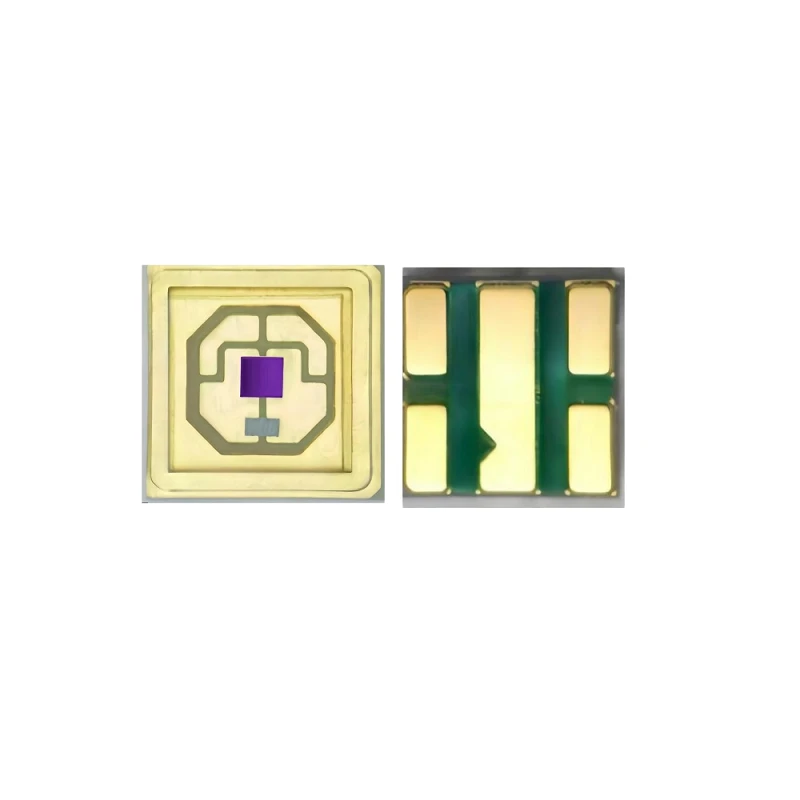
First, let’s get the basic definition right. A low power laser module is a self-contained, pre-aligned assembly that generates a coherent laser beam with an output power rating typically between 1 mW (milliwatt) and 500 mW. Before you tune out because of the power number, let’s put that in perspective: a standard 100 W lightbulb is 100,000 mW, so even the upper end of low power is just half of one percent of that. That’s not the kind of power that cuts metal or etches deep into glass—instead, these modules are built for precision, consistency, and reliability, not high-energy cutting or welding. They combine three core parts: a laser diode (the “heart” that generates the light), optical components (lenses, mirrors, or diffusers) that shape and stabilize the beam, and a housing that holds everything in place, plus wiring for power and control. Unlike a bare laser diode, which is finicky, easy to misalign, and requires extra parts to work, a module comes fully calibrated out of the box—you plug it in, and it works. That’s the biggest value for our customers, whether they’re building a consumer gadget or a industrial assembly line.
I get a lot of new customers who think all low power laser modules are the same, and that’s where a lot of problems start. Not all modules are built with the same attention to detail, and the difference between a module that works for 1,000 hours and one that fails in 100 hours comes down to the materials and build quality. At our facility, we source laser diodes from manufacturers that test every unit for threshold current, beam quality, and temperature stability before it even reaches our assembly line. The housing we use is usually aluminum or hard-anodized plastic, not flimsy cheap plastic that can warp with temperature, and we use industrial-grade optics that don’t degrade from constant vibration—something that’s critical for modules going into construction equipment or factory robotics.
Let’s talk about beam types, because that’s what defines how a low power laser module is used. The most common is a standard Gaussian beam, which looks like a perfect, round dot (or line, if you add a line generator lens) that’s bright and consistent. That’s the kind you see in barcode scanners, where a thin, crisp line of laser light scans across a package to read the code. We also make line modules, crosshair modules, and even infrared modules that are invisible to the naked eye—super important for applications like security cameras, where you need a laser to illuminate a area at night without people seeing it. One of our favorite custom builds a few years back was a tiny 5 mW crosshair module for a surgical laser positioning tool; it had to be so precise that the crosshair lines didn’t waver by more than 0.1 degrees, even when the tool got sterilized hundreds of times. We tested 12 different housing materials to find one that wouldn’t warp after 500 autoclave cycles, and that’s the kind of attention to detail that separates a supplier from someone just selling off-the-shelf parts.
Now, what are these modules actually used for? Let’s start with the things you interact with every day. Your grocery store’s self-checkout: that’s a low power laser module scanning your items. The laser printer in your office: uses tiny low power lasers to draw the image on a photo conductor drum before toner is applied. The laser pointers people use at presentations (the reliable ones, not the cheap ones that die after a few uses) are also low power modules, usually 1 mW to 5 mW, safe for casual use. But the bigger, less talked about applications are where most of our business comes from. Industrial automation is huge: we supply modules for conveyor line part detection, where a laser beam is broken when a part moves past, triggering a sensor to sort it. We work with a lot of medical device manufacturers, too: modules for blood analyzers that count cells, or dental tools that use laser light to detect cavities early. Even the smartphone you carry has a low power laser module in it, for facial recognition sensors that project 30,000 tiny dots to map your face, or LiDAR for depth sensing.
A common question we get is about safety. Since these are low power, people assume they’re totally harmless, but that’s not quite true. Even a 1 mW red laser can damage your eyes if you stare directly into the beam for more than a few seconds, which is why all our modules are Class 2 rated (for visible light, up to 1 mW) or Class 3R (up to 5 mW, for near-infrared or custom applications). We always include safety guidelines with every shipment, and we work with our customers to make sure they’re using the module in a way that meets global safety standards, like IEC 60825. The key point here is that low power doesn’t mean “no power”—it just means the power is focused on precision, not high energy.
What makes a good low power laser module, in our opinion? It’s not just about meeting a power spec. It’s about consistency. If a customer is assembling 10,000 circuit boards, and each one needs a laser marker module that marks a tiny serial number, every module has to output the exact same brightness, beam size, and wavelength. Even a 5% variation in wavelength can make the mark unreadable on a small component. We test every module for temperature stability, too—if a module is going to be used in a factory where temperatures swing from 10°C to 40°C, it can’t shift its beam or drop power as the temperature changes. That’s why we build in thermistors and temperature controls for custom modules, something off-the-shelf modules often skip. Reliability is another big one: a customer can’t have a module fail in the middle of a production run, so we test every unit for 24 hours straight before it leaves our facility, checking for power drops, beam drift, and wiring issues.
I’ve seen a lot of misinformation online about low power laser modules lately, especially with the rise of cheap, imported modules that are sold on third-party marketplaces. These modules often cut corners: they use low-quality diodes that burn out in a few hundred hours, flimsy housings that warp, and optics that cause the beam to be blurry. Last year, a customer came to us because they’d bought 500 modules from a big online supplier for their assembly line, and a third of them failed in less than two weeks. We tested a sample: one module had a power output that was 40% lower than the spec, another’s beam was so blurry it couldn’t read a standard barcode, and half of them cut out when the temperature went above 25°C. That’s the risk of buying untested parts—for a business, downtime from a failed module can cost thousands of dollars per hour, way more than the extra cost of a reliable module from a trusted supplier.
At the end of the day, low power laser modules are the unsung heroes of modern industry and consumer tech. They don’t make big news like high-power cutting lasers, but without them, most of the things we rely on every day wouldn’t work. Whether you’re a small business owner building a new smart gadget, a manufacturing engineer designing a production line, or a researcher working on a medical device, the right low power laser module can make your product work better, faster, and more reliably.
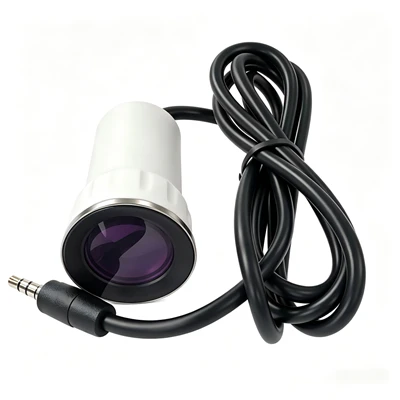
If you’re in the market for low power laser modules—whether you need off-the-shelf units for a simple project, or custom-built modules tailored to your exact specifications—we’re here to help. We work with customers across every industry, from startups to large global manufacturers, and we’ll walk with you through every step: from choosing the right power rating and beam type, to testing, delivery, and post-purchase support. Don’t settle for cheap, untested parts that can derail your project. Reach out today to discuss your needs, and let’s find the right laser module for your application.
Automotive Health Cabin References
- International Electrotechnical Commission. IEC 60825-1:2014, Safety of Laser Products – Part 1: Equipment classification and requirements. Geneva, Switzerland: IEC, 2014.
- IEEE Standard for Safety Levels with Respect to Human Exposure to Laser Radiation, 0.38 μm to 13 μm. IEEE Std C95.3-2019, 2019.
- Coldren, L. A., Corzine, S. W., & Mashanovitch, M. L. Diode Lasers and Photonic Integrated Circuits, 2nd ed. Hoboken, NJ: John Wiley & Sons, 2012.
- "Laser Modules: A Guide to Types and Applications." Laser Focus World, 1 Jan 2022.
UVLEDTEK Group
As one of the most professional laser module manufacturers and suppliers in China, our products have good reputation in the market. Please rest assured to buy high quality laser module at competitive price from our factory. For more information, contact us now.
Address: Building C6-1, Optics Valley United Technology City, Gaoxin 3rd Road, Gedian Development Zone,Ezhou City, Hubei, China
E-mail: info@uvledtek.com
WebSite: https://www.uvledtek.com/
