If you’ve ever stared at a door hardware aisle at a home improvement store, trying to decode why some pull handles feel loose or wobbly while others click into place with a satisfying, secure thud, you’ve probably stumbled across a pull handle lock cylinder—and didn’t even know it. For decades, I’ve worked as a lock cylinder supplier, installing, troubleshooting, and sourcing these parts for commercial offices, residential properties, and even industrial warehouses, and I’m here to break down exactly what makes them different from the keyed cylinders you might be used to, why they matter, and how to pick the right one for your space. Lock Cylinder
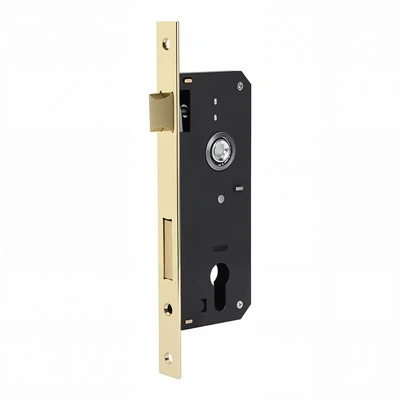
First, let’s get the basics straight: a lock cylinder, in general, is the core, removable part of any lock that holds the keyway, pins, and tumblers that match a specific key. It’s the “brains” that turn a key into action—locking or unlocking a deadbolt, door knob, or pull handle. Now, a pull handle lock cylinder is a specialized variant designed to integrate seamlessly with pull handles (also called exit devices, panic bars, or push-pull handles) common on commercial and high-traffic residential doors. Unlike a standard deadbolt cylinder that mounts separately from the handle, this cylinder is built directly into the pull handle’s assembly, so turning the key operates both the cylinder and the handle in one smooth motion. That’s the biggest difference: it eliminates the need for two separate lock mechanisms on a single door, cutting down on installation time, cost, and points of potential failure.
Let’s break that integration down further, because it’s not just a fancy design choice. Pull handles are meant for high-traffic areas—office lobbies, school classrooms, apartment building entryways, retail storefronts—where people need to exit quickly during an emergency. You can’t have someone fumbling for a key and then pulling a handle to exit in a fire drill or active threat scenario. The pull handle lock cylinder solves that: when you insert your key, turning it both retracts the latch and disengages the lock, and the handle itself is spring-loaded, so you can push or pull it to open the door once the lock is released. For incoming traffic, the handle is locked with the cylinder, and for outgoing traffic, it’s a free, unobstructed path. That’s why you’ll find these cylinders almost exclusively on doors that require both controlled access from outside and emergency egress from inside—they’re a middle ground between a standard keyed lock and a panic bar, which usually only unlocks by pushing, no key required.
Now, I’m a supplier, so I know every detail that matters to people buying these parts. Let’s talk about the components that make a pull handle lock cylinder work, because not all are created equal. First, the keyway: most standard cylinders use a pin tumbler keyway, which has a series of small metal pins that align with the key’s cuts to turn the cylinder. But many pull handle cylinders are also available in other keyway types, like tubular, which is more common on commercial doors because it’s harder to pick, or interchangeable core, which lets you rekey the entire lock in seconds without removing the cylinder—huge for property managers who have to change keys for multiple tenants or employees. Then there’s the cam, that small metal arm that sticks out of the back of the cylinder. For pull handles, the cam is specifically shaped to engage with the handle’s latch mechanism, so when you turn the key, it pulls or pushes the cam to release the latch. The length of the cam matters, too—too short, and it won’t reach the handle; too long, and it’ll bind up, making the handle hard to turn. That’s where a good supplier comes in: we stock cams in multiple lengths, from 1 inch to 2.5 inches, to fit every make and model of pull handle.
Durability is another big factor, especially for high-traffic doors. A pull handle lock cylinder is used far more often than a standard deadbolt cylinder. Every day, dozens of people might pull that handle to exit, so the cylinder has to withstand constant turning, exposure to the elements if it’s an exterior door, and even tampering. That’s why the best ones are made from solid brass or zinc alloy, not cheap steel that can rust or bend. The pins inside should be hardened steel, so they can’t be drilled or snapped easily. I’ve seen too many cheap pull handle cylinders from overseas that break after a few months of heavy use—people call me frantic because their office door won’t lock anymore, or the key won’t turn. Investing in a high-quality pull handle lock cylinder isn’t just about security; it’s about avoiding costly downtime, like when a retail store has to close temporarily because their main entry lock is broken.
Wait, let’s clear up a common misconception: pull handle lock cylinders are not the same as exit device trim cylinders, which are just the part that covers the edge of the pull handle. No, the cylinder itself is the functional core. Another mix-up: some people think if you have a pull handle, you just need a standard keyed cylinder. But try that once. If your standard cylinder is in the deadbolt, separate from the handle, you’ll have to lock the deadbolt every time, and in an emergency, people might pull the handle expecting it to open, only to find the deadbolt is still engaged. That’s a safety hazard, plain and simple. The pull handle lock cylinder is designed so that locking the cylinder from the outside also secures the handle, and unlocking it lets the handle move freely. It’s a single point of control for both access and egress, which is required by most building codes in the U.S. and around the world for commercial doors. I’ve had architects come to me specifically asking for pull handle cylinders that meet ANSI/BHMA Grade 1 standards, which are the highest durability ratings for commercial locks—because they know those locks have to stand up to 200,000 uses or more.
Now, let’s talk about when you should use one of these cylinders, versus another type. If you’re installing a new door for an office, school, or multi-unit residential building, a pull handle lock cylinder is almost always the right choice if you need controlled outside access and easy inside egress. If you have a small residential door, like a back door, and you don’t have frequent heavy use, a standard cylinder might work, but a pull handle cylinder can add extra security without the bulk of two separate locks. If you’re retrofitting an existing pull handle, make sure you get the right diameter: most pull handle cylinders are either 1-1/8 inches or 1-1/4 inches in diameter, so you’ll need to measure your current hole to get the correct size. That’s where a supplier’s expertise matters—we don’t just sell parts; we help you measure, make sure you get the right cam and keyway, and even offer rekeying services if you need to change old keys to new ones.
I’ve been supplying lock cylinders for over 15 years, and I’ve learned that the best advice I can give anyone is to not cut corners on a pull handle lock cylinder. I’ve seen customers buy a $10 cylinder online, only to have it break within a month, costing them hundreds of dollars in repair and replacement. A high-quality pull handle lock cylinder might cost $30 to $50, but it’s built to last, it’s code-compliant, and it won’t leave your building vulnerable to security breaches. Plus, we offer custom key options, so you can have multiple keys that all work the same cylinder, which is perfect for property managers who need to give access to maintenance staff, receptionists, and management without making extra copies.

If you’re reading this, chances are you’re a building owner, facilities manager, contractor, or handyman who needs to source a pull handle lock cylinder, or maybe you’re curious about upgrading your door security. Whatever your need, we’ve got the experience and inventory to fit any door, any project, and any budget. We stock all major brands, including interchangeable core cylinders, Grade 1 rated options, and specialty keyways for high-security applications. Our team can help you identify the exact cylinder you need, walk you through installation tips, and even offer bulk pricing for large projects like new office buildings or apartment complexes. Don’t settle for a generic cylinder that won’t stand up to use or meet code—reach out to our team today to discuss your pull handle lock cylinder needs, and let us help you find the right solution for your space.
Door Closer References
- American National Standards Institute/Builders Hardware Manufacturers Association (ANSI/BHMA). Standard for Building Hardware, Lock Sets, and Exit Devices. ANSI/BHMA A156.10, 2020.
- International Code Council (ICC). International Building Code (IBC) 2021, Chapter 10: Means of Egress.
- Locksmithing Magazine. “Modern Lock Cylinder Technology: Pull Handle Solutions for High-Traffic Spaces.” Locksmithing Today, vol. 32, no. 4, 2022, pp. 18-22.
- National Fire Protection Association (NFPA). NFPA 101: Life Safety Code, 2021, Chapter 7: Means of Egress.
Jiangsu Wenzhong Lock Industry Co., Ltd.
As one of the most experienced lock cylinder manufacturers and suppliers in China, we also support customized service. We warmly welcome you to wholesale bulk cheap lock cylinder in stock here from our factory. If you have any enquiry about pricelist, please feel free to email us.
Address: Xiaoliang Industrial Park, Danyang City, Jiangsu Province
E-mail: Rongoo7@163.com
WebSite: https://www.wenzhonglocks.com/
