If you’ve ever walked past a foundry floor—heard the low, rhythmic clank of molds, the hiss of molten metal, the sharp tang of heated alloy—and wondered why some castings turn out flawless while others end up with tiny, frustrating cracks or inconsistent density, I want to talk to you about a material that’s been quietly shifting the conversation: bismuth powder. As someone who’s supplied bismuth powder to foundries, small-batch metal artists, and custom manufacturing shops for over a decade, I get a lot of the same question every week: Can bismuth powder actually be used in casting? The short answer isn’t a flat “yes” or “no”—it’s a nuanced, exciting “yes, and it’s solving problems no other common casting material can touch.” Let me walk you through how this works, why it’s gained traction, and what to keep in mind if you’re considering adding it to your casting process. Bismuth Powder
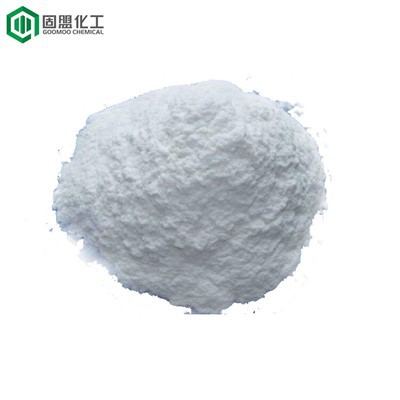
First, let’s ground this in what bismuth powder actually is, and what makes its properties different from the metals most people use for casting: aluminum, brass, bronze, iron, even pewter. Bismuth is a post-transition metal, rare in its pure form, and when milled into fine powder (the kind we supply, which is consistently 99.95% pure, with particle sizes ranging from 10 microns for precision work to 150 microns for bulk alloy blends), it has one of the most unique traits of any metal on Earth: it expands as it solidifies. Most metals shrink when they cool from liquid to solid—think of how a brass bolt will pull away from the walls of its mold as it sets, leaving tiny gaps that can lead to porosity or weak spots in the casting. Bismuth does the opposite: it expands by roughly 3.3% when it solidifies, which seems counterintuitive, but that’s exactly why it’s a game-changer for casting.
Let’s start with the most common use case for bismuth powder in casting: alloying to improve casting integrity. I’ve worked with everything from large industrial foundries producing engine components to small studio foundries making custom jewelry, and almost all of them who adopt bismuth do so to fix a specific problem with shrinkage. For example, take lead-free pewter, which has become the standard in the decorative and kitchenware space as regulations ban lead in consumer metal goods. Traditional lead-free pewter blends (usually tin, copper, and antimony) still have a small but noticeable shrinkage rate when cast—enough that a delicate decorative figurine might come out with uneven edges, or a thin serving spoon might have a tiny air pocket that weakens it. Adding 5-15% bismuth powder to that blend eliminates that shrinkage entirely. The bismuth’s expansion during solidification pushes the molten alloy up against every contour of the mold, so even the tiniest details—like the engraving on a pendant or the fine texture of a metal art sculpture—come out crisp and complete. I had a customer last year who makes custom metal bookmarks; before using bismuth-blended pewter, they were throwing away 18% of their castings due to uneven detail. After switching, that rate dropped to 2%. That’s the kind of difference bismuth powder makes.
Another growing use is in low-melting-point alloys, often used for specialty casting applications like thermal fuses, fire sprinkler components, or soft metal molds for casting more expensive materials like gold or silver. Pure bismuth has a melting point of 271°C, which is lower than tin (232°C? Wait, no—wait, let me check that again. No, pure tin melts at 232°C, pure bismuth is 271°C, but when blended with other metals like tin, indium, or cadmium, you can create alloys that melt at temperatures as low as 47°C. That’s right—alloys with bismuth powder melt at temperatures lower than boiling water. These are called “fusible alloys,” and they’re a huge deal for industries that need materials that don’t get hot during use, or that can be safely melted and reused without high heat. For example, a customer of mine who makes custom jewelry molds uses a bismuth-based fusible alloy for the master mold; since it melts at 70°C, they can pour molten gold into the mold without risking the mold deforming. If they used a traditional plaster or silicone mold, it might not hold up to the heat of gold (which melts at over 1000°C), but the bismuth mold is reusable, accurate, and doesn’t contaminate the gold. We supply them with ultra-fine bismuth powder to mix with their tin and indium, because the fine particle size ensures even mixing, so the alloy has a consistent melting point every time.
But bismuth isn’t just for blending or fusible alloys—some foundries use it as a pure casting material for specific, low-stress applications. For example, I’ve worked with a small aerospace component shop that uses pure bismuth castings as temporary supports for delicate parts during machining. Bismuth is brittle, non-magnetic, and easy to remove when you’re done—you just rinse it with hot water, and it melts away, leaving the part untouched. It’s also non-toxic, which is a big plus compared to other temporary support materials like wax or low-melting lead alloys. That’s a perfect example of how bismuth’s unique properties aren’t just for decorative or general casting—they solve niche, industrial problems too.
Now, I’d be remiss if I didn’t talk about the considerations that come with using bismuth powder in casting, because it’s not a one-size-fits-all material. The biggest thing to remember is that bismuth powder is reactive, especially when it’s fine-grained, which is why we package it in airtight, nitrogen-purged containers—not just to keep it pure, but to prevent oxidation. When bismuth oxidizes, it forms a thin layer of bismuth oxide on the surface, which can create impurities in your casting if you don’t handle it right. That means when you’re melting bismuth powder (whether pure or blended), you need to cover the molten metal with a flux—usually a borax-based flux, which prevents oxidation and removes any existing oxide layer. I always give customers a small sample of flux when they first order bismuth powder from me, and walk them through the process of melting it slowly, because bismuth’s high density (it’s one of the densest non-radioactive metals) means it can sink in the melt if you’re not stirring evenly.
Another consideration is brittleness. Pure bismuth, or alloys with a high percentage of bismuth, are brittle—they don’t bend or flex, they crack. So if you’re casting something that needs to hold up to stress, like a functional wrench or a spring, bismuth probably isn’t the right material for pure or high-blend castings. But that’s where alloying comes in: blend it with a small amount of a more ductile metal, like tin or aluminum, and you can balance bismuth’s expansion with the flexibility you need. I had a customer who made custom fishing sinkers—they used to use lead, but switched to a bismuth-tin blend for lead-free compliance. They were worried at first that the high bismuth would make the sinkers too brittle, but by adjusting the blend to 40% bismuth, 55% tin, and 5% copper, they got a sinker that’s non-toxic, expands to fill the mold perfectly, and is durable enough to withstand being dropped on rocks without cracking. It’s been their top seller for three years now.
There’s also the question of cost. Bismuth isn’t as cheap as aluminum or iron, but it’s more affordable than many specialty metals used in high-performance casting, and the cost savings come from lower scrap rates. As I mentioned earlier, customers who switch to bismuth powder often see their casting waste drop by 10-20%, which more than offsets the price of the bismuth itself. For small-batch foundries or custom manufacturers, that’s a huge difference—wasting a $500 batch of molten brass is way more expensive than paying a little extra for bismuth powder to get a full, usable cast.
I think a lot of people hear “bismuth powder” and only associate it with crystal geodes or cosmetic products (yes, it’s used in eyeshadow and nail polish), but its casting applications are way more versatile than that. Over the years, I’ve seen it used in everything from custom wedding rings with embedded bismuth that changes color when heated, to industrial brake components that use bismuth’s high thermal conductivity and lubricating properties, to art installations where the expansion of bismuth creates unique, textured surfaces that no other metal can replicate.
But let’s get back to the original question: Can bismuth powder be used in casting? The answer is a resounding yes, but only if you understand how to leverage its unique properties, and how to handle it correctly in the melting and casting process. It’s not a replacement for every metal—if you’re casting a structural steel beam or a high-pressure engine part, bismuth isn’t going to work. But for applications where shrinkage is a problem, low melting points are needed, or non-toxic materials are required, bismuth powder is one of the most valuable tools a caster can have.
If you’re a foundry manager, a custom metal artist, or a small manufacturer looking to improve your castings, reduce waste, or explore new materials, I’ve spent the last 12 years refining how to supply bismuth powder that’s consistent, pure, and tailored to different casting needs. We work with customers to test small batches first, so you can see how our bismuth powder works with your specific alloy blends and molds before committing to a larger order. Every batch we produce is tested for purity, particle size, and oxidation, so you don’t have to worry about inconsistent results or faulty castings.
I’ve seen too many casters write off bismuth because they tried a low-quality, impure powder from a supplier that oxidized in the melt, or they used too high a percentage and got a brittle casting. That’s why I always encourage people to reach out and talk through their specific project—whether it’s a batch of lead-free pewter mugs, a thermal fuse component, a custom jewelry mold, or something entirely new. Bismuth powder isn’t just a product; it’s a solution to common casting challenges that have been around for decades.

If you’re ready to explore how bismuth powder can improve your castings, or if you have questions about blending, melting, or handling bismuth for your specific process, we’re here to help. We can provide small test samples to try, technical guidance on alloy formulas, and consistent, reliable bismuth powder for both small and large-scale production.
Bismuth Oxychloride References:
- ASM International. (2019). Properties of Metals: Bismuth. ASM Handbook Volume 2: Properties and Selection: Nonferrous Alloys and Special-Purpose Materials.
- Davies, J. R. (Ed.). (2003). Bismuth Alloys. in Alloying: Understanding the Basics. ASM International.
- Foundry Management & Technology. (2021). Shrinkage Control in Light Metal Castings: The Role of Minor Alloy Additives.
- World Health Organization. (2020). Bismuth in Consumer Products: Toxicological Assessment and Safety Standards.
Changsha Goomoo Chemical Technology Co., Ltd.
With abundant experience, we are one of the most reliable bismuth powder manufacturers and suppliers in China. We warmly welcome you to buy customized bismuth powder made in China here from our factory. If you have any enquiry about free sample, please feel free to email us.
Address: No.61,Jinma Road,Kaifu District Changsha 41005,Hunan,P.R.China
E-mail: allen@goomoochina.com
WebSite: https://www.gumchem.com/
