If you’ve spent any time in the precision machining space, you’ve likely heard the hype around 5-axis turn-mill machines—tools that blur the line between turning and milling, let you machine complex parts in a single setup, and cut down on production time dramatically. But if you’re a shop owner or engineer weighing whether to invest in one, you’ve probably asked the same question I get asked every single day: How accurate is this thing, really? Turn‑Mill Machine Machine
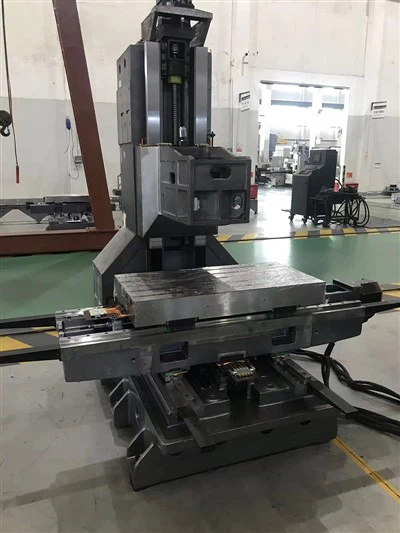
I’m not a textbook or a marketing brochure, so let’s cut through the jargon. I’m the guy who’s been selling 5-axis turn-mill machines for 12 years, who’s visited hundreds of job shops, watched their machinists fumble with misaligned parts, and who’s torn down enough machine components to know that “accuracy” isn’t a single number—it’s a whole chain of factors, most of them more impactful than the machine’s spec sheet numbers you see online. Let’s break this down, no fluff.
First, let’s get one thing straight: when a machine manufacturer publishes an accuracy rating, that’s not a guarantee of how it will perform in your shop. That rating is tested in a controlled environment—temperature-controlled, no floor vibration, maybe even run for only a few hours before testing. Your shop has coolant running 24/7, a lift truck rumbling down the aisle every hour, and maybe your new machine is sitting next to an old mill that leaks oil onto the floor. Those are real-world variables that eat into accuracy far more than any minor difference between machine models.
That said, the core accuracy of a good 5-axis turn-mill machine (the base spec manufacturers do test) comes down to three key measurements: positional accuracy, repeatability, and geometric accuracy. Positional accuracy is how close the machine moves its axes to the exact point you program it to hit. Repeatability is how consistently it gets to that same point, every single time you move it there. Geometric accuracy is how straight, square, and round each axis is—think of it as the foundation that makes the other two numbers make sense.
For a mid-tier 5-axis turn-mill that’s built for job shops, positional accuracy usually lands around ±0.002 mm (that’s 0.00008 inches, for our US-based customers) and repeatability is about half that, ±0.001 mm. For high-end models built for aerospace or medical implants, those numbers can drop to ±0.0008 mm and ±0.0004 mm, respectively. But here’s the catch: that’s the accuracy of the machine in its factory testing, before you load a heavy part, before you run it for 8 hours straight, before you swap out cutting tools.
Let’s talk about the biggest accuracy killer for turn-mill machines: thermal growth. This is the #1 issue I hear machinists complain about, and it’s rarely talked about in marketing. A machine’s ball screws, spindle, and linear axes all expand as they get warm from continuous use. A spindle that’s running at 10,000 RPM will heat up after an hour of cutting, enough to grow by 0.01 mm or more along its axis—and that’s before you even touch the cutting tool. Good 5-axis turn-mill machines have built-in thermal compensation: sensors that track the spindle and axis temperatures and adjust the programming in real time to offset that growth. Cheaper models skip that, or use basic compensation that only accounts for spindle temperature, not the whole machine. I had a customer last year who bought a budget 5-axis turn-mill, and after a year of running 12-hour shifts, his parts were coming out 0.05 mm off—because the machine’s axis bearings were heating up unevenly, and there was no compensation to fix it. He traded it in for a mid-tier model with full thermal compensation, and his scrap rate dropped by 80% almost overnight.
Next, there’s the turn-mill specific part of accuracy: when you’re doing both turning and milling on the same machine. Traditional mills and lathes are built with their own sets of precision, but a 5-axis turn-mill has to switch between two very different cutting processes, and that transition is where accuracy can fall apart. For turning, you need a rigid, high-torque spindle to hold the part while you cut metal deep. For milling, you need a spindle that can spin fast, have tight runout, and hold small tools precisely. If the machine’s spindle design doesn’t balance those two, you’ll get part deflection during turning and poor surface finish during milling, which reads as lower accuracy to your operators.
I always tell customers: check the runout spec for the spindle, specifically when you’re using both turning collets and milling tool holders. Runout is how much the tool or spindle wobbles as it spins. For good 5-axis turn-mills, runout at the tool tip is less than 0.002 mm when a tool is seated properly. Budget models can have runout of 0.005 mm or more, which means you’ll end up with uneven cuts, even if your programming is perfect.
Then there’s the fifth axis itself—this is the part that makes turn-mill machines 5-axis, and it’s also the part that causes the most accuracy issues. Most 5-axis turn-mills use either a trunnion table or a swivel head for the rotary axis. Trunnion tables hold the part and rotate it, while swivel heads hold the cutting tool and rotate it. Each has its own accuracy tradeoffs. Trunnion tables are usually more rigid for heavy turning jobs, but if their rotary axis isn’t calibrated properly, you can get what’s called “angular error” — that means when you rotate the table 90 degrees, the part is tilted a few thousandths of a millimeter off square. Swivel heads offer more access to parts with complex angles, but their design is more complex, so they’re more prone to thermal growth and backlash (play in the axis that makes it hard to hit the same point twice).
A few years back, I worked with a medical parts shop that was manufacturing spinal implants. They needed to mill bone grafting slots at 15 degrees, and their old 3-axis machine required multiple setups, which introduced alignment errors. They switched to a 5-axis turn-mill with a trunnion table, and their setup time went from 2 hours per part to 15 minutes. But when they first ran parts, the slots were coming out 0.03 mm narrower than programmed—turns out their trunnion table wasn’t calibrated, and the rotary axis had a 0.015 mm angular error. We sent a technician to calibrate the table and adjust the rotary parameters, and those errors went away. That’s another key point: accuracy isn’t just about the machine being built right—it’s about maintaining it, calibrating it regularly, and making sure your operators know how to use the rotary axes properly.
Wait, but what about when you’re machining a part with tight tolerances, like a turbine blade or a gear that needs to hold ±0.005 mm? I get that all the time. The best 5-axis turn-mill machines can hit those tolerances—if you pair them with good practices. That means using precision tool holders, making sure your workholding is aligned to the machine’s coordinate system, and running a thermal warm-up cycle before production. Most shops I work with run their machine at 5,000 RPM for 15 minutes before starting a job, to get all the components to a consistent temperature, so thermal compensation works properly. If you skip that, you’ll get part errors, no matter how good your machine’s spec sheet says it is.
Now, let’s be real: not every shop needs that level of accuracy. If you’re making parts with ±0.1 mm tolerances, a basic 5-axis turn-mill will work fine, no problem. But if you’re in aerospace, medical, or automotive powertrain parts, where tolerances are tight, you need to look beyond the spec sheet. I always tell customers to ask for a demo part. Bring your own print, give it to the machine’s operator, and watch how long it takes to machine, then check the accuracy with a CMM after it’s done. That’s the only way to know for sure if a machine will work for your parts.
I also see a lot of confusion between accuracy and precision. They’re not the same thing. Accuracy is how close you are to the target. Precision is how consistent you are. A machine can be precise but not accurate—like a darts player who always hits the same spot, but it’s not the bullseye. Or accurate but not precise—hitting different spots that average to the bullseye, but not consistently. The best 5-axis turn-mill machines have both: they’re accurate (hit the target dimension) and precise (hit it every time, even after repeated moves and temperature changes).
Another factor that most people overlook: the machine’s control system. A great machine is only as good as the software that runs it. A good 5-axis control will have advanced kinematics that account for the rotary axes’ position, so the machine knows exactly where the cutting tool is at all times, even when the table or head is swiveling. Cheap control systems use basic kinematics that can’t compensate for small errors in the rotary axes, so you’ll get part errors when you’re machining complex angles. I’ve seen operators spend hours manually adjusting offsets on a budget machine, just to get a part to fit, when a better control system would have done that automatically.
Let’s circle back to the original question: what’s the accuracy of a 5-axis turn-mill machine? The short answer is: it depends. It depends on the machine’s build quality, the type of rotary axes, whether it has thermal compensation, the control system, and how you use and maintain it. The long answer is that a well-built, properly calibrated and maintained 5-axis turn-mill can hold tolerances as tight as ±0.001 mm for small, complex parts, while a budget model will struggle to hit ±0.01 mm consistently, even with careful setup.

After 12 years in this business, the biggest mistake I see shops make is chasing numbers on a spec sheet, instead of matching the machine to their actual parts and processes. A customer last year bought a high-end 5-axis turn-mill for making garden equipment parts, which only need ±0.05 mm tolerances. He paid 30% more than he needed to, just because the spec sheet had a lower accuracy number. Meanwhile, a job shop I work with that makes small medical implants spent the extra money on a high-end model with full thermal compensation, and they’re able to take on jobs that their competitors can’t, because their parts are consistently within tolerance on the first run.
Horizontal Milling Machine So if you’re in the market for a 5-axis turn-mill machine, don’t just ask “how accurate is it?” Ask: “What accuracy can I get when machining my specific parts, in my shop, over a full shift?” That’s the question that actually matters. And if you want to talk through your needs, whether you’re making low-tolerance prototype parts or high-precision aerospace components, I’m here to help. We can schedule a demo, run test cuts of your parts, and show you exactly what kind of accuracy you can expect, no marketing hype, no vague numbers. Let’s talk through your project, walk through the machine’s setup, and make sure you’re investing in a tool that will actually move your production forward.
References
- ISO 10360-2:2001, Geometrical product specifications (GPS) — Acceptance and reverification tests for coordinate measuring machines (CMM) — Part 2: CMMs used for measuring linear dimensions
- Bryan, J.B., International Status of Thermal Error Research, Annals of the CIRP, Vol. 39, No. 2, 1990, pp. 645-656
- Smith, G.T., Fundamentals of Machining and Machine Tools, 3rd Edition, CRC Press, 2013
- VDI/VDE 2617 Blatt 9.1, Accuracy of coordinate measuring machines; characteristics and their testing; 5-axis measuring heads, 2008
- Schultes, F., Thermal Error Compensation in Machine Tools – A Practical Approach, Journal of Manufacturing Processes, Vol. 18, 2015, pp. 112-120
Smartech Machinery & Equipment Co., Ltd.
As one of the most professional turn‑mill machine machine manufacturers and suppliers in China, we also support customized service. Please rest assured to buy bulk turn‑mill machine machine made in China here from our factory. Contact us for more details.
Address: Room 2832, Changping Commercial Mansion, Shihua Road, Futian Free Trade Zone, Shenzhen, China
E-mail: smartech@smartechcnc.cn
WebSite: https://www.smartech-cnc.com/
