Hey folks, if you’ve ever wondered what goes on behind the scenes when a tank truck rolls out of our yard, the biggest question we get from drivers, fleet managers, and even curious folks is this: how do you make sure it doesn’t leak? For us, integrity isn’t just a buzzword—it’s the reason our clients come back, and the reason we stay up late double-checking every little detail. Let’s break this down like we talk it around the shop floor—no stuffy engineering jargon, just the real stuff we do. Tank Truck

First off, let’s be clear: a tank truck’s integrity isn’t just one thing. It’s not just “no leaks” when you first fill it. It’s holding up when you bump a pothole, when you haul a load that’s 40,000 pounds, when you park in the sun for 8 hours, or when you switch from hauling water to gasoline to chemicals. We test at every single step of building a truck, not just at the end. That’s where a lot of cut corners happen, right? Some vendors just do a quick pressure test once, but we’re all over it.
Let’s start with the tank itself, because that’s the heart of the whole thing. We build our tanks from carbon steel or aluminum, depending on what the client needs, but both need to be welded tight. Welds are the weak spot—even a tiny crack in a weld can turn into a big mess on the road. First, after a weld goes down, we do a visual check. Not just a quick glance—we use a magnifying glass and a bright light to look for pinholes, uneven seams, or bits of slag stuck in the weld. We also do a dye penetrant test here, which is super simple but works like a charm. We spray a red dye over the weld, wipe it off after 10 minutes, then spray a white developer. Any tiny crack or hole will pull the red dye through, and it shows up instantly. No guesswork there. But that’s just surface-level.
Next, we move to non-destructive testing (NDT) for deeper stuff. We use ultrasonic testing (UT) to check the thickness of the tank walls. Wait, why? Because over time, steel can corrode from the inside, especially if you’re hauling corrosive chemicals, or even just water that sits in the tank for months. UT sends sound waves through the metal, and we measure how long it takes to bounce back—thinner metal means the sound travels faster, so we can spot any thinning before it becomes a problem. For us, every tank gets UT done in three key spots: the bottom, the top, and the middle, where most flex happens when the truck drives. We also use magnetic particle testing for steel tanks, which is perfect for finding micro-cracks that dye penetrant might miss. We spread iron filings over the welds, turn on a magnetic field, and the filings stick to any cracks like glue. That’s how we catch stuff that’s too small to see with the naked eye.
Now, the big one: pressure testing. This is the test everyone waits for, because it’s where you actually see if the tank holds. But there are two types of pressure tests we do, depending on the use case. For standard tanker trucks that haul non-hazardous stuff like fuel or water, we do a hydrostatic test first. That means we fill the tank completely with water, seal all the openings, and pump it up to a pressure that’s higher than what it’ll ever see on the road. Usually, that’s 15 to 20 PSI—way more than the 5 to 10 PSI you get from a full load sloshing around. We leave it for 30 minutes, then check every weld, every bolt, every valve for drips. If there’s even a single drop leaking, that’s a fail. We drain the water, fix the weld, and do it again. For hazmat tanks, though, we also do a pneumatic test with air—wait, why? Because some hazardous materials expand when heated, and air tests simulate that pressure surge. We’re careful here, of course—we never use too much air, because a ruptured tank is dangerous. We monitor the pressure the whole time with calibrated gauges, so if it drops, we know there’s a leak somewhere.
But wait, pressure testing just checks the tank itself. What about all the other parts that connect to it? The fill ports, the discharge valves, the vents, the gauge ports—those are all potential leak points too. We don’t just hook them up and forget. For every fitting on the tank, we do a separate leak test. For example, the discharge valve: we connect it to a small air line, pressurize it, and submerge the valve in a tub of water. Any bubbles mean a bad seal, so we replace the gasket or tighten the fitting until it’s bubble-free. Same with the fill cap—we test it to make sure it doesn’t come loose on the road, but also that it doesn’t leak fumes. For vapor recovery systems, which are required for fuel haulers, we do a vacuum test too. We pull a small vacuum on the vapor lines, and if the pressure doesn’t hold, we trace the line with a sniffer that detects fuel vapors. That’s how we make sure no fumes escape into the air, which is not just good for compliance, but also prevents fire hazards.
Once the tank is done, we don’t stop there. We have to test how it mounts to the truck chassis, because even a perfect tank will leak if it’s bolted on wrong. We do a load test: we fill the tank to its maximum capacity, 90% usually, because sloshing adds extra stress. Then we drive it around our private test track—potholes, turns, bumps, even a few hard stops—to simulate real road conditions. While we’re driving, we have a team in the back with us, checking every weld and fitting for leaks. We also use strain gauges attached to the chassis and tank to measure how much they bend under load. If a strain gauge shows more bending than it should, we adjust the mounting brackets or add reinforcement. That’s how we avoid the “fatigue” that happens from years of rough driving—we catch it before it even leaves the yard.
Oh, and let’s talk about environmental testing, because temperature changes can mess with integrity too. If you’re hauling a load in 100°F heat in Arizona, or in 20°F cold in Minnesota, metal expands and contracts. We simulate that with thermal cycling. We heat the tank to 120°F, then cool it down to 0°F, over and over, for 10 cycles. After each cycle, we do a pressure test to make sure no cracks developed from the expansion and contraction. A lot of fleets forget about this, but it’s why some tanks leak after a few months of service—they never tested for temperature stress. We don’t cut that step, because our clients need their trucks to work no matter where they’re operating.
Wait, what about aftermarket mods? Sometimes clients want to add things like a pump for discharge, or a heating system for thick chemicals. We don’t just hand them the tank and say “good luck.” We test every mod too. For example, if a client adds a heating coil inside the tank, we pressure test the coil separately to make sure it doesn’t burst or leak into the load. We also test how the heating system affects the tank’s overall integrity—if the metal gets hot, does it warp? We check the welds around the coil after running the heater for 24 hours straight. That way, the client doesn’t have to worry about a mod causing a leak down the line.
Now, let’s be real—no test is perfect, but we do our best to cover every angle. We also follow all regulatory standards, like FMCSA (Federal Motor Carrier Safety Administration) rules in the US, or IMDG for international hazmat, but we go above and beyond the minimum requirements. Why? Because our reputation is on the line. If one of our trucks leaks, it’s not just a lost sale—it’s a safety risk, and we take that seriously.
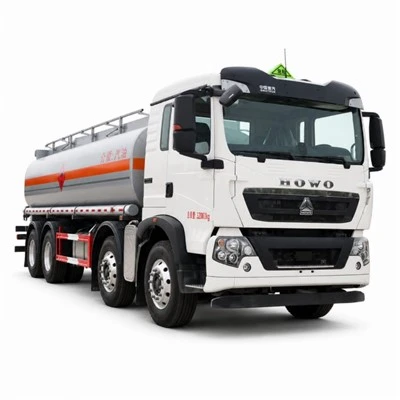
If you’re a fleet manager looking for a tank truck that actually holds up, or someone who just wants to make sure your current truck is safe, give us a holler. We can walk you through our testing process in person, or answer any questions you have about how we keep your loads and roads safe. Don’t settle for a vendor who cuts corners on integrity—this is stuff that matters.
Generator Truck References:
- American Petroleum Institute (API) Standard 650: Welded Tanks for Oil Storage
- Federal Motor Carrier Safety Administration (FMCSA) Part 393: Parts and Accessories Necessary for Safe Operation
- National Board Inspection Code (NBIC) Chapter 7: Inspection and Testing of Pressure Vessels
- Society of Automotive Engineers (SAE) International J2708: Non-Destructive Testing for Commercial Vehicle Tanks
Hubei Ruitu Technology Co., Ltd.
Hubei Ruitu Technology Co., Ltd. is one of the most experienced tank truck manufacturers and suppliers in China, also supports customized service and OEM service. Welcome to buy advanced tank truck made in China here and get pricelist from our factory. Also, 1 year warranty is available.
Address: Xingguang Road, Zengdu District, Suizhou City, Hubei Province
E-mail: Sales@ritumax.com
WebSite: https://www.ruitumotors.com/
