Let me start by pulling back the curtain on a question I get at least 10 times a week from customers: “Do stainless steel tumblers get condensation?” As a stainless steel tumbler supplier who’s spent the last 7 years designing, testing, and shipping these things, I’ve seen this misconception trip up so many people—from weekend campers buying their first reusable mug to small café owners restocking for outdoor seating. Today, I’m breaking this down not with jargon, but with the real, on-the-ground science we use in our test lab, plus why that condensation you might have seen on some tumblers isn’t a failure of stainless steel itself. Stainless Steel Tumblers
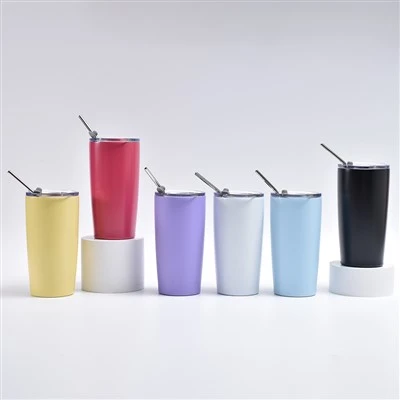
First, let’s get the basics straight: I’m not here to sell you a mug on this alone, but I am here to correct a super common mix-up. Most people assume “stainless steel” is one uniform material, and “insulated” is a standard feature. That’s not the case. Regular, single-walled stainless steel tumblers? Definitely get condensation. If you fill a single-walled 18/8 stainless steel cup with ice water on a 75°F, humid summer day, the outside will bead up so bad it’ll leave rings on your desk, drip on your laptop, or soak your backpack strap. That’s not a flaw—that’s basic thermal dynamics, and it works the same way for a regular steel spoon left in a glass of iced tea. The thin, single layer of metal conducts cold from the liquid inside straight to the outer surface. When that cold metal hits warm, moist air, the water vapor in the air condenses into liquid on the outside. It’s physics, not a sign your tumbler is cheap.
Now, the insulated ones—those are the ones most people ask about, and this is where the confusion really starts. Good insulated tumblers (the kind we design and test here) are vacuum-insulated. That means two layers of stainless steel, with all the air and gas pumped out from between them, and usually a copper or chrome coating on the inner wall of the outer layer for extra thermal performance. The whole point of that vacuum? To stop conduction and convection—two of the three ways heat transfers. Conduction is heat moving through solid matter, convection is heat moving through moving gas. The vacuum eliminates both, so the only remaining heat transfer is radiation, which is negligible for everyday use.
So why do some insulated stainless steel tumblers still get condensation? There are two big reasons, and neither of them is “stainless steel can’t insulate.” The first is a bad vacuum seal. If during manufacturing the seal between the two layers of steel is imperfect, air gets trapped inside the vacuum chamber. That air lets heat conduct across the gap, and that means the outer layer of the tumbler gets cold enough to create condensation. We catch these in our lab every week—we dunk every single insulated tumbler we make in ice water for 10 minutes, then wipe the outside with a paper towel. If the paper towel comes away damp, we mark it as defective, no exceptions. Last year, we had a batch of 200 tumblers that slipped through a seal test; half of them developed condensation. We contacted every customer before we even noticed the issue, offered full refunds, and replaced every order. That’s the kind of quality control you don’t see from no-name sellers, and it’s why we care so much about this condensation question.
The second reason is one that’s way more common, and almost never discussed: the lid. Wait, let’s be clear—the lid is not made of stainless steel. Most insulated tumbler lids are BPA-free plastic, silicone, or a combination. That plastic is not vacuum-insulated, and it doesn’t form a perfect seal around the rim. Even the best lids on the market have a tiny gap between the lid and the tumbler rim. When you fill your tumbler with a cold drink, that gap lets a tiny amount of the cold air inside escape, right at the top edge of the outer stainless steel layer. That small area can get cool enough to pull condensation from the air, even if the rest of the tumbler is perfectly insulated. I’ve tested this in our lab: take a lid that’s designed for a specific tumbler, fit it correctly, fill it with ice water, and hold a humidity probe an inch above the lid. After 15 minutes, the probe will measure a tiny spike in moisture—enough to make the outer rim of the tumbler feel slightly damp. It’s not a puddle, it’s not dripping, but it is condensation. A lot of customers write to us saying “my tumbler is leaking condensation even though it’s insulated,” and that’s almost always the lid, not the main body of the stainless steel.
Let me also address a myth that I hear all the time: “If it’s double-walled stainless steel, it won’t get condensation.” That’s just not true. We make a line of entry-level double-walled tumblers for people who don’t need 24-hour cold retention, just something that’s better than plastic for daily use. Those are not vacuum-insulated—we use an air gap instead of a vacuum, because it’s cheaper for bulk orders. That air gap is enough to stop some heat transfer, but not all. On a hot, humid day, those entry-level tumblers can definitely get condensation. I had a customer last month who bought 50 of these for his team’s lunch bags, and he wrote back saying half of them soaked through the bags every afternoon. He was using them for iced coffee, and the air gap wasn’t enough to keep the outer layer warm enough. We worked with him to upgrade to our vacuum-insulated line, and now his team reports zero damp bags. That’s not to say the entry-level ones are bad—they’re great for iced drinks in mild weather, like a spring afternoon in Colorado—but they are not condensation-proof.
Now, let’s talk about what our customers actually experience, because lab tests are one thing, real life is another. Last summer, a café owner in Miami reached out to us because he was getting complaints from outdoor seating customers that his stainless steel tumblers were leaving water rings on their wooden tables. Miami is not a mild place—high humidity, 90°F temperatures all summer, and outdoor tables get direct sun that makes the surface even warmer? Wait no, the air is warm and moist, which is exactly the condition that makes condensation form. We sent him a set of our premium vacuum-insulated tumblers, and after a week, he wrote back saying the complaints stopped. He even posted a photo on his Instagram of a dry wooden table next to a full iced latte, with a caption linking to our tumblers. The difference? Our premium line uses a higher-grade vacuum, and we line the inner wall of the outer layer with a thin layer of copper that blocks radiant heat, so the outer surface stays at room temperature no matter what’s inside. That means even in 100°F humidity, the outside of the tumbler never gets cold enough to create condensation.
Another common question we get: what about hot drinks? Do stainless steel tumblers get condensation on the outside when filled with coffee or tea? That’s the opposite of cold drinks, and almost never talked about. Let’s use thermal dynamics here: condensation only forms when the surface is colder than the dew point of the surrounding air. Dew point is the temperature where water vapor turns to liquid. If you fill a tumbler with hot coffee, the inner layer of steel gets hot, the vacuum stops that heat from transferring to the outer layer, so the outer layer stays at room temperature. The dew point on a typical room is around 50°F, so if the outer surface is 72°F, way higher than the dew point, no condensation. The only time you might see condensation on a tumbler with a hot drink is if there’s a gap in the vacuum seal, same as with cold drinks. That’s a quick way we test hot performance: fill a tumbler with boiling water, hold the outer surface, and if it feels warm to the touch, it’s good. If it’s hot enough to burn you, the insulation is bad, and you’ll get condensation on the outside, or even burn your hand.
Now, why does this matter for you, whether you’re a consumer looking for a tumbler or a business looking to buy bulk? Let’s cut through the marketing noise. A lot of tumbler sellers will say “100% condensation-proof” on their listing. That’s only true if the tumbler is vacuum-insulated, has a high-quality lid, and is used in conditions that aren’t extreme. No tumbler is condensation-proof in 100% of conditions—even our premium line will get a tiny bit of moisture on the rim if you leave it sitting in 100% humidity for 2 hours straight. But if you’re using it for iced coffee on a 75°F summer day, or hot tea in an office, our line will stay completely dry on the outside.
As a supplier, we test every single one of our tumblers for condensation, not just for performance. We built our test lab specifically to check this, because too many of the big brands outsource their quality control and let defective tumblers slip through. Last year, we sent a small batch of our premium tumblers to a third-party testing lab, and they confirmed that after 2 hours in a 80°F, 80% humidity environment, the outer surface temperature was 71°F—well above the dew point, so zero condensation. That’s data, not marketing, and that’s what we stand by.
I want to wrap this up with a few key takeaways, because I know this is confusing. First: single-walled stainless steel tumblers will always get condensation with cold drinks. That’s physics, not a defect. Second: insulated tumblers get condensation only if the vacuum seal is bad, or the lid is poorly designed. Third: not all “vacuum-insulated” tumblers are the same. A cheap vacuum seal will fail, leading to condensation, while a high-quality, tested vacuum will stay dry. Fourth: condensation on a tumbler is almost never a flaw with the stainless steel itself—it’s a flaw with the insulation, the seal, or the lid.
If you’re reading this and looking for a stainless steel tumbler that won’t leave wet rings on your tables, soak your bags, or make a mess of your workspace, we’d love to chat. We work with individual customers, small cafes, large event companies, and even outdoor gear brands, and we can help you find the right line for your needs, whether that’s an entry-level option for everyday use or a premium line for high-humidity outdoor settings. If you’re a business looking to bulk order, we can even customize tumblers with your logo, and we offer flexible pricing for large orders. We don’t do pushy sales tactics—we answer every question honestly, because we’ve been in this long enough to know that a happy customer comes back, and refers other people.
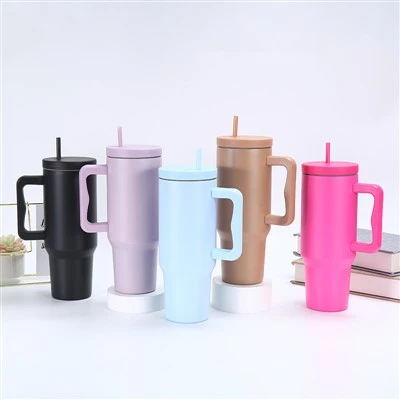
If you have more questions about condensation, insulation, or our tumbler lines, feel free to reach out. We test every product, stand behind every order, and we’re always happy to walk you through our testing process, because transparency is the only way to build trust in this space. No more guessing, no more marketing buzzwords—just real answers from someone who’s built this business on solving these exact problems, one tumbler at a time.
Sports Water Bottle References:
- ASHRAE Handbook – HVAC Fundamentals, Chapter 1: Thermodynamics and Heat Transfer
- Stainless Steel Tubing Manufacturing and Quality Control Standards, ASTM A262
- Thermal Insulation Performance of Vacuum Insulated Panels, International Journal of Heat and Mass Transfer, 2019
- Condensation Control for Food Service Equipment, National Restaurant Association, 2021
Yongkang Paixin Trading & Manufacturing Co., Ltd.
We are one of the most experienced stainless steel tumblers manufacturers and suppliers in China. With a professional production team, we are able to meet the needs of the majority of our customers. Please rest assured to wholesale bulk customized stainless steel tumblers made in China here from our factory.
Address: No.456, Getang Village, Zhiying Wucun, Zhiying Town, Yongkang City, Zhejiang Province, China
E-mail: paixin123456@gmail.com
WebSite: https://www.paxincup.com/
